RECOLLECTION / 記還
Nishiaizu International Art Village, Fukushima, Japan
For this exhibition, Samimi assumes the intertwined roles of artist, gatherer, and caretaker, bringing together materials that embody the layered histories of Nishiaizu, Fukushima, Japan.
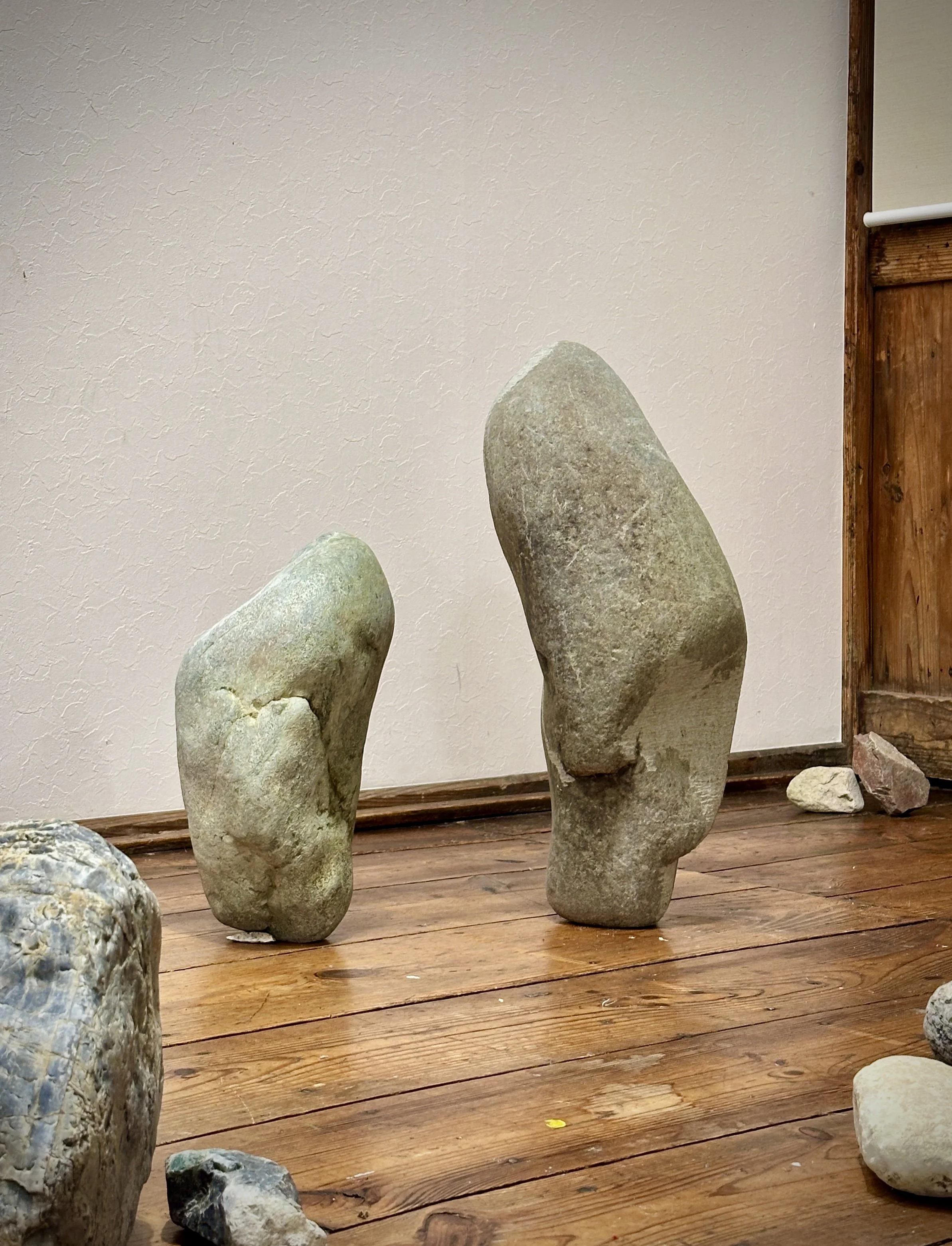
Stones shaped by eons, wood fragments from a fallen tree, handmade washi forms formed by forgotten garden stones, and earth pigments derived from local river soil form an installation attentive to both presence and loss. These materials—altered by industry, weathering, and human touch—serve as portals into the intertwined timelines of landscape and memory.
Within former classrooms, four quiet works exist in counterpoint to the energy that once filled the spaces.
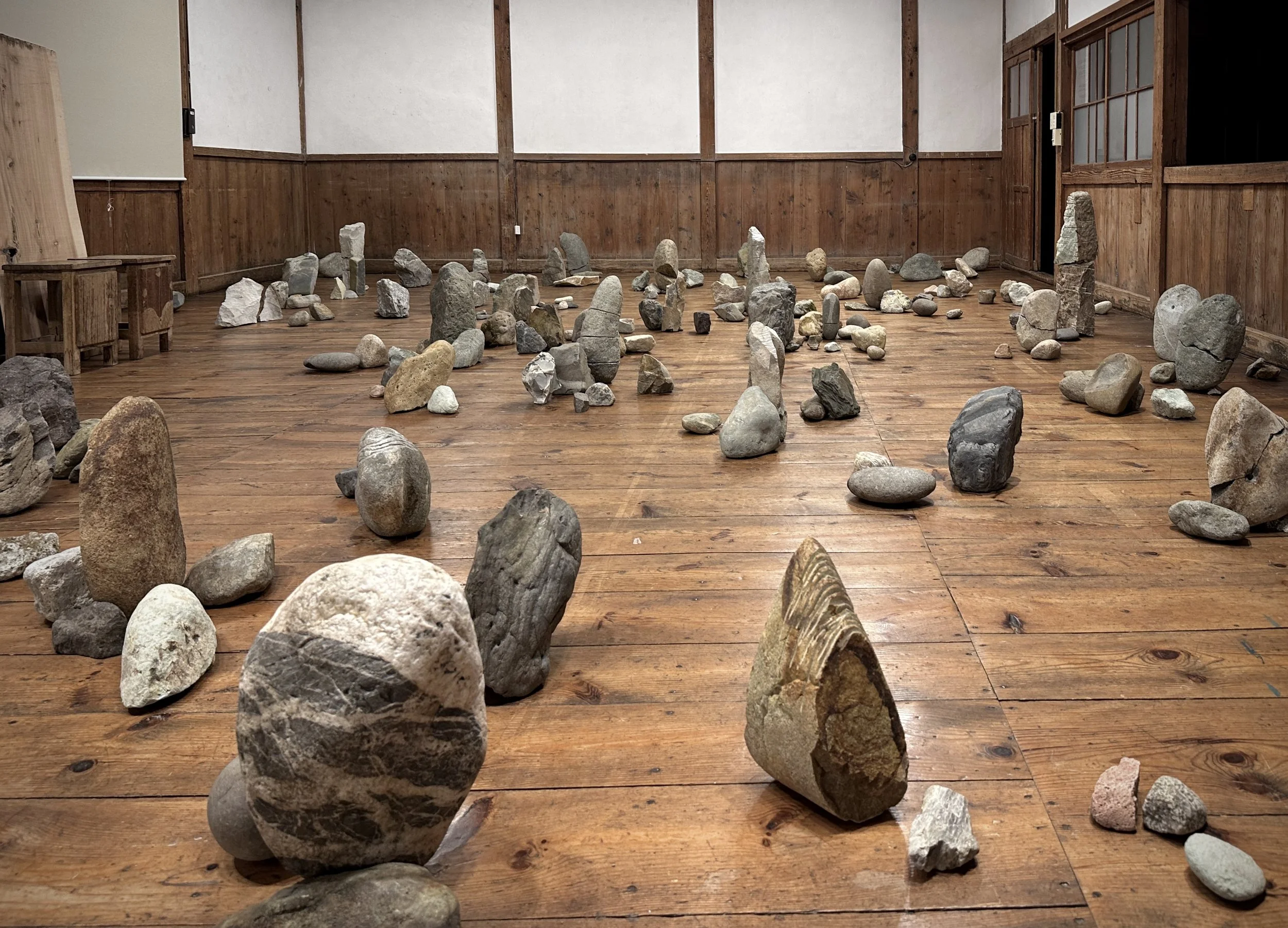
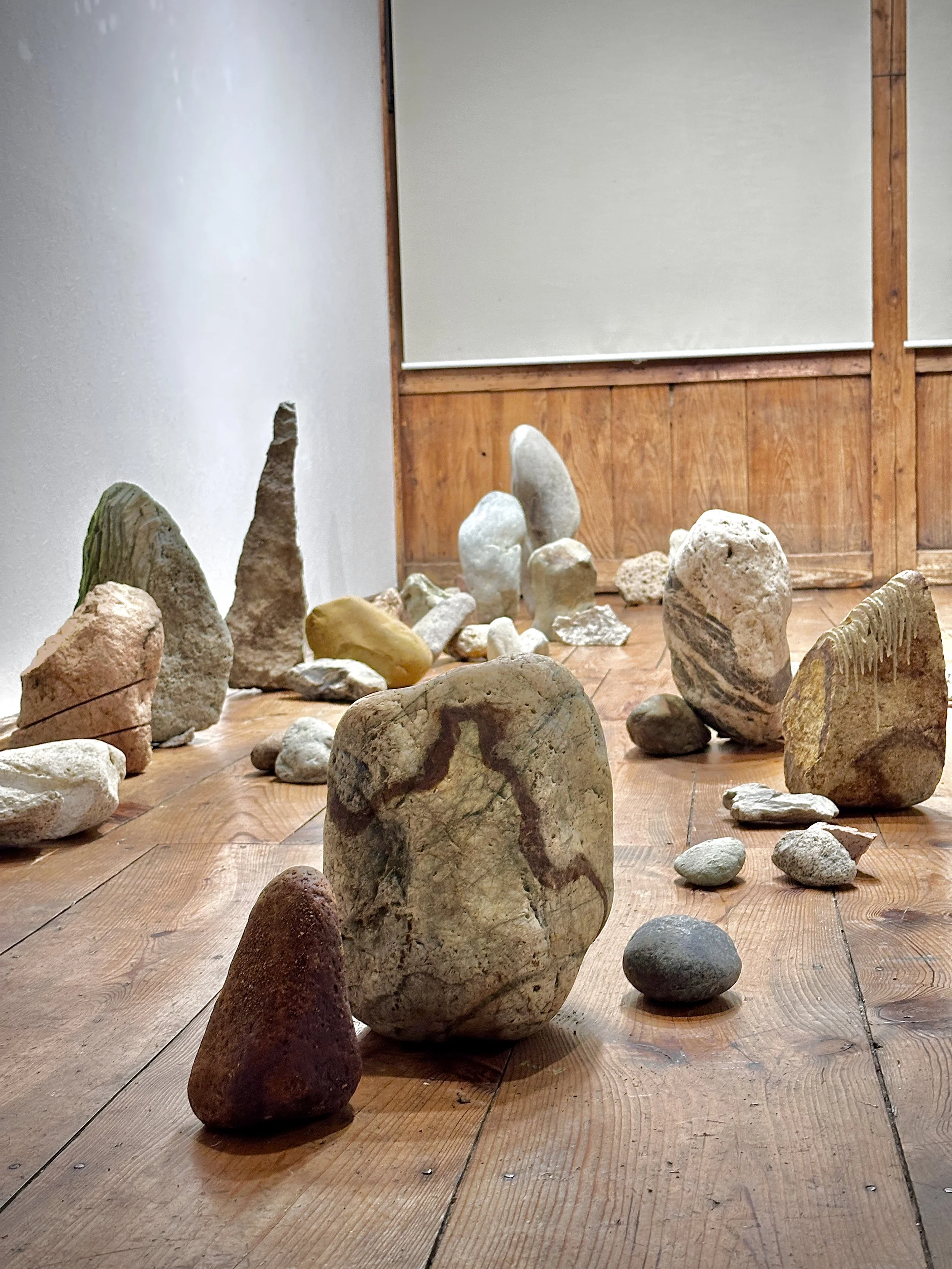
Here, the sitting stones are the oldest inhabitants, reminding us of long-standing continuities that underlie human settlement and departure. The tree fragments, reimagined as a contemplative structure, echo centuries of prayer and devotion absorbed from the shrine they grew beside. The paper stones hover between physicality and lightness, body and ghost; and the earth-painted scroll features loose gestures which simultaneously depict a landscape and contain traces of the past.
Collectively, the exhibition reflects on the region’s depopulation and the shifting boundaries between what is preserved, overlooked, or allowed to decay. Through these gathered remnants, Samimi invites the viewer to encounter the subtle spiritual charge held within material fragments—and to witness the quiet persistence of the non-human world as it endures beyond human narratives.
Landscape
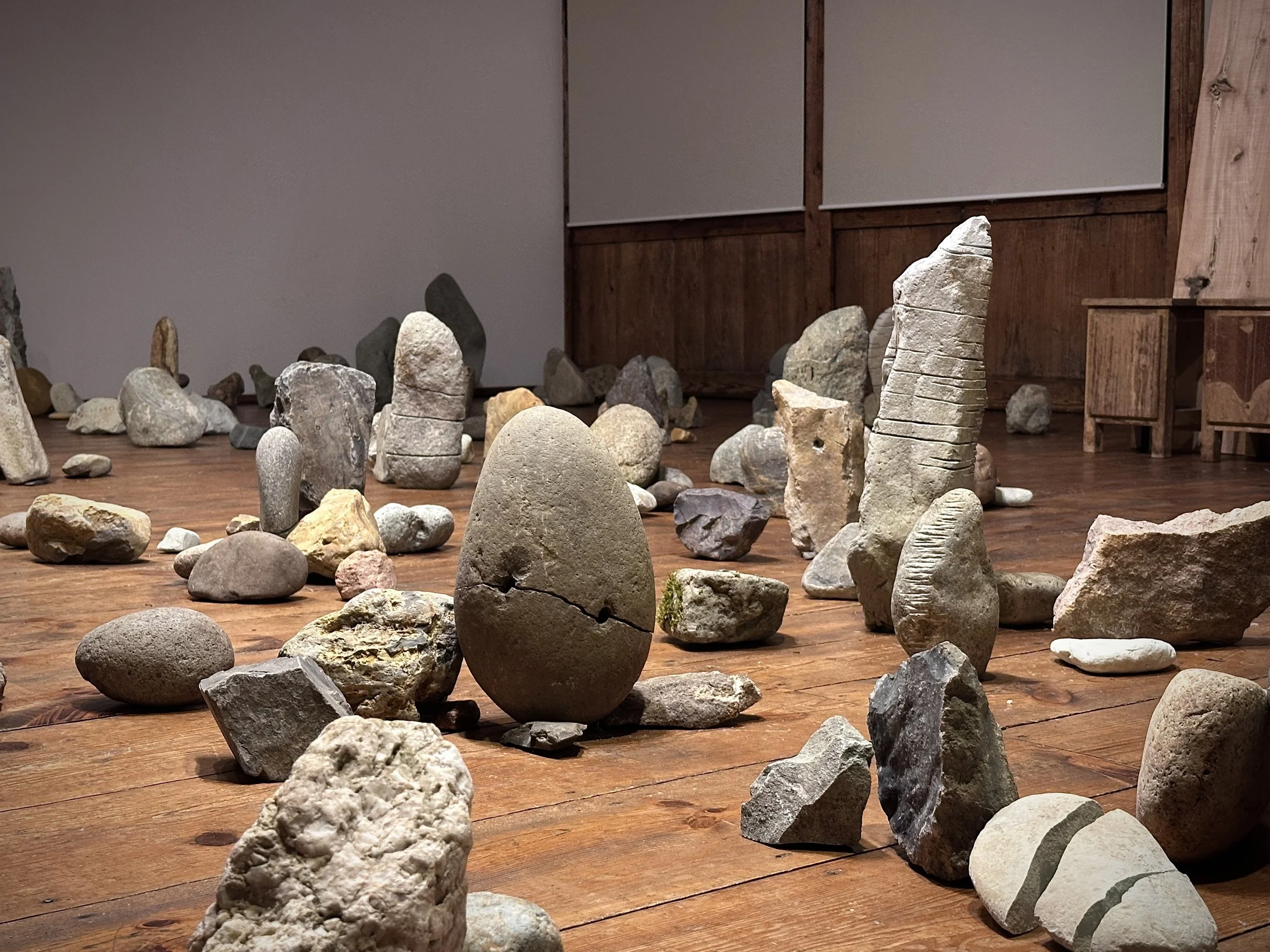
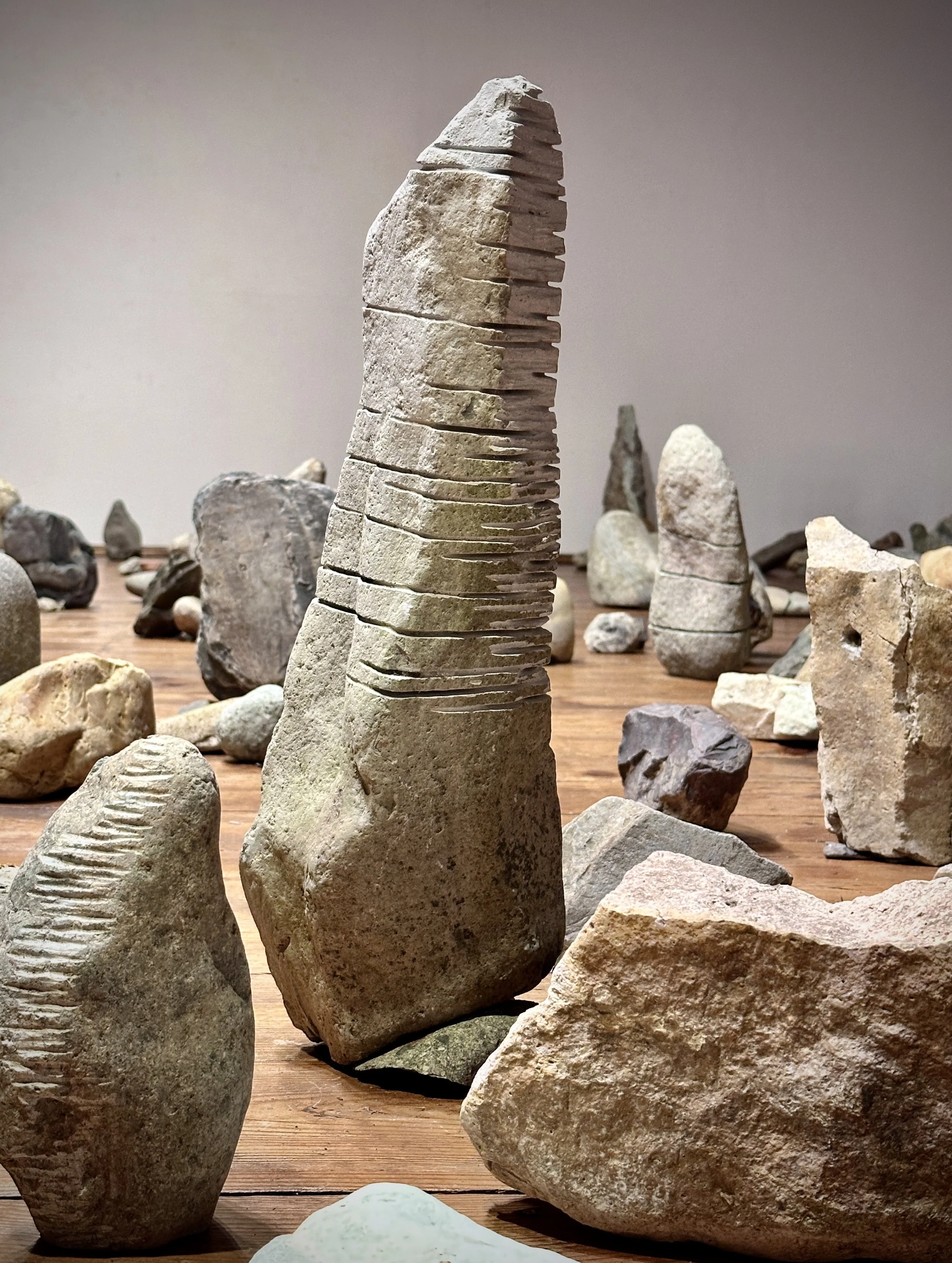
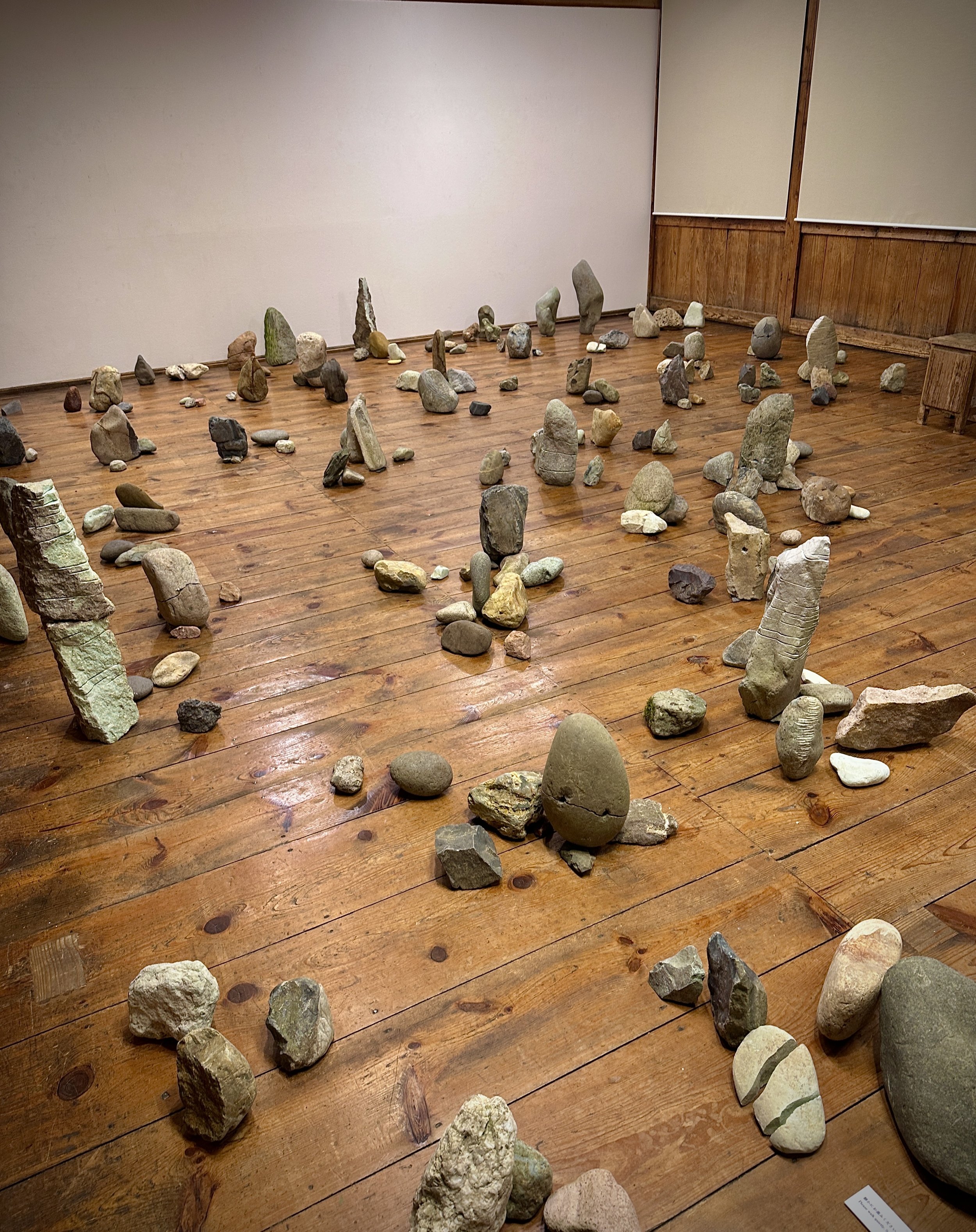
Collected stones
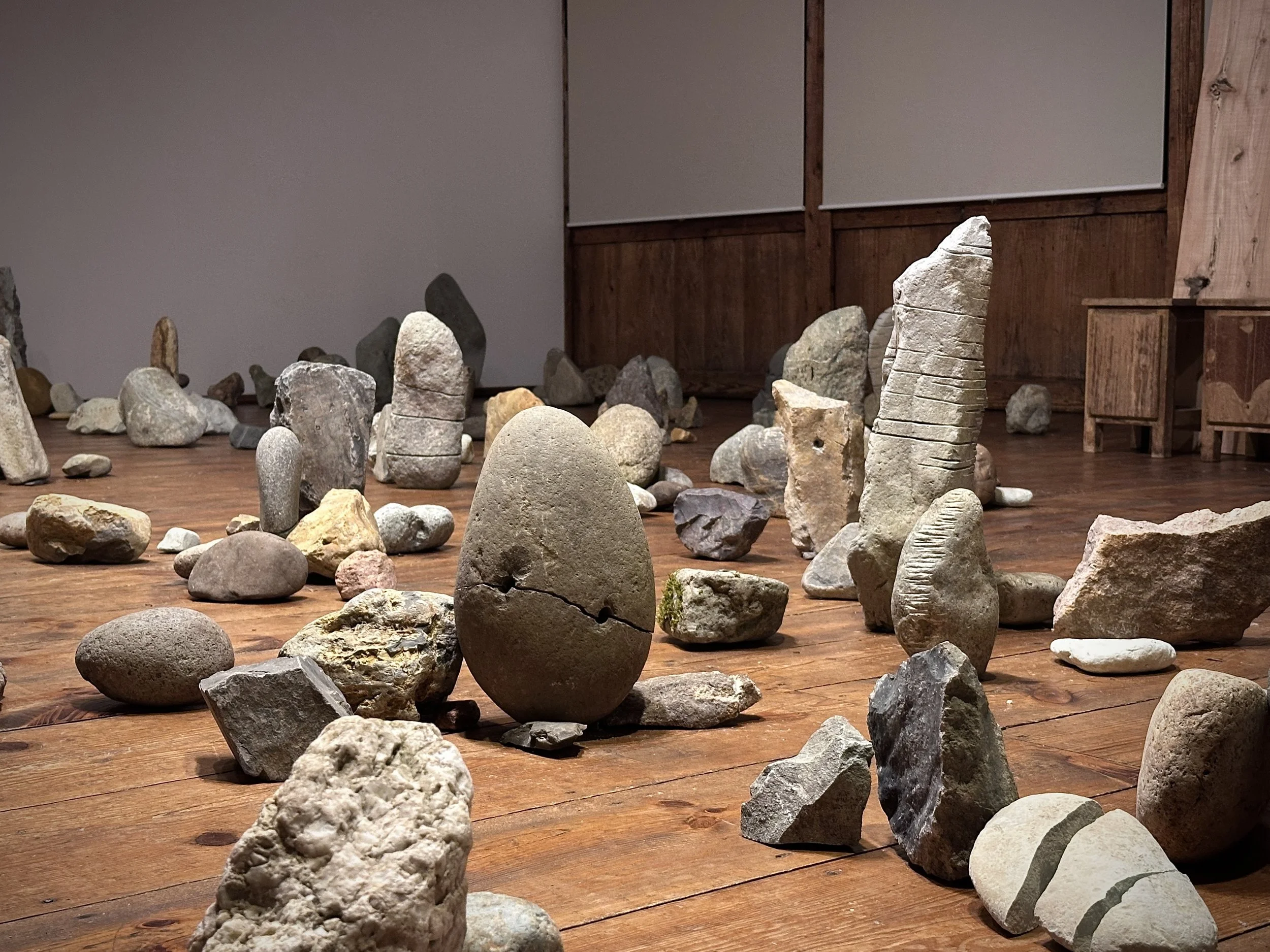
Hundreds of stones, gathered from landscapes marked by human industry and neglect, rest once more in quiet company. Each was displaced and forgotten, yet they endure — patient, existing beyond time.
For a few months, they’ll inhabit an old classroom, their silence contrasting the echoes of children who once filled the space with noise and dynamism. Older than memory, these stones are honored as the original inhabitants of this land — reminding us of a deeper, enduring continuity beneath the surface of human change.
____________________________________________________
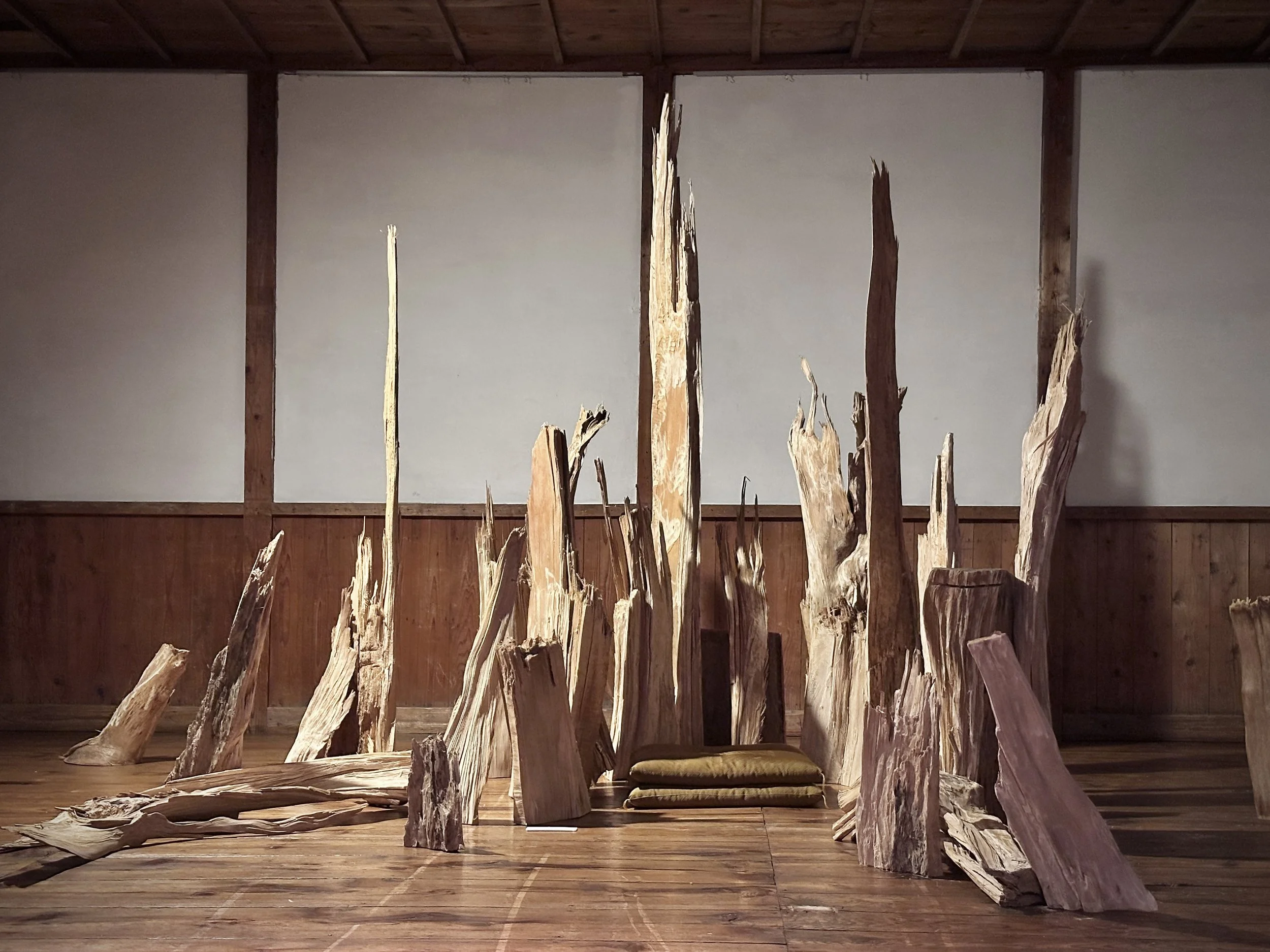
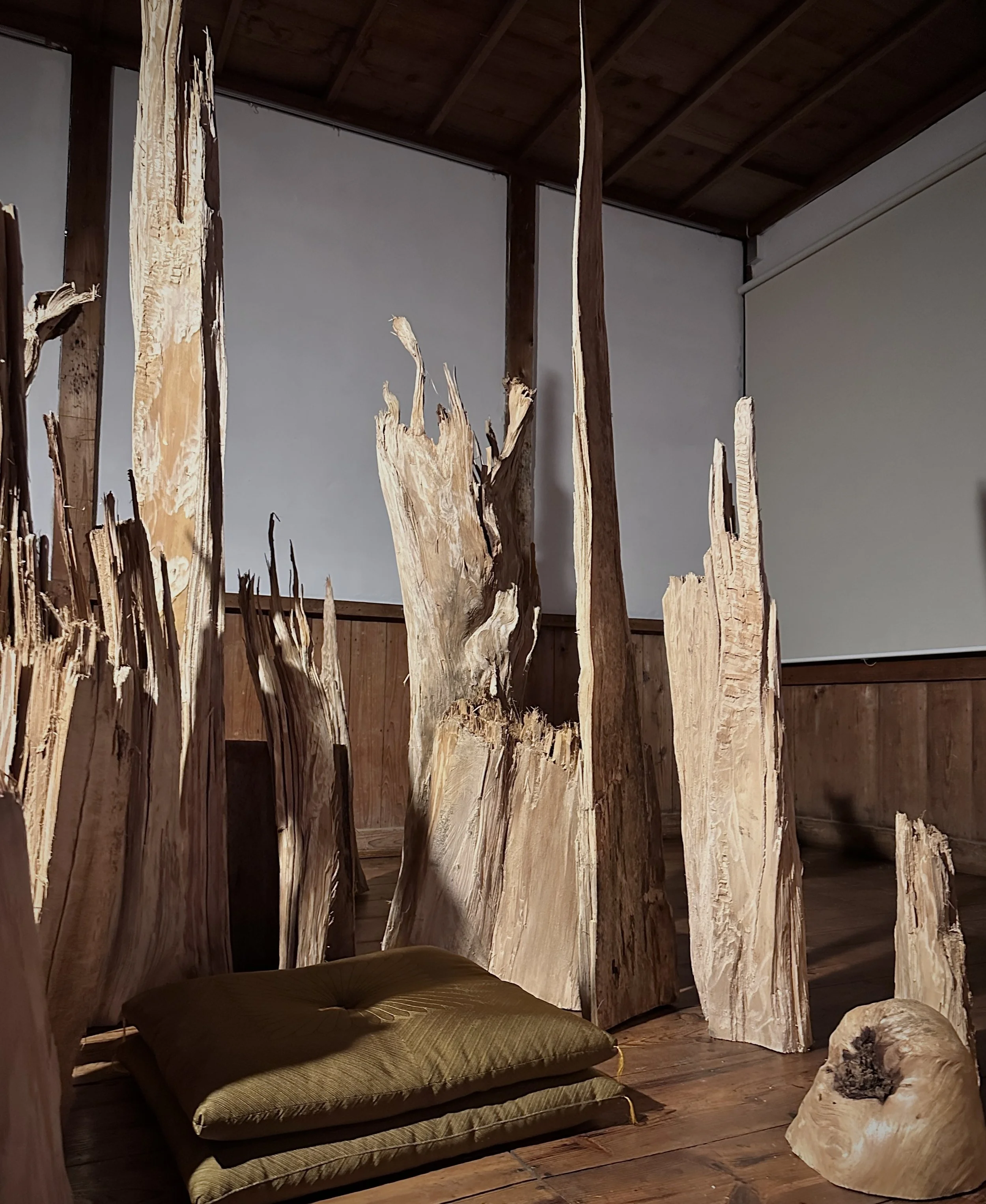
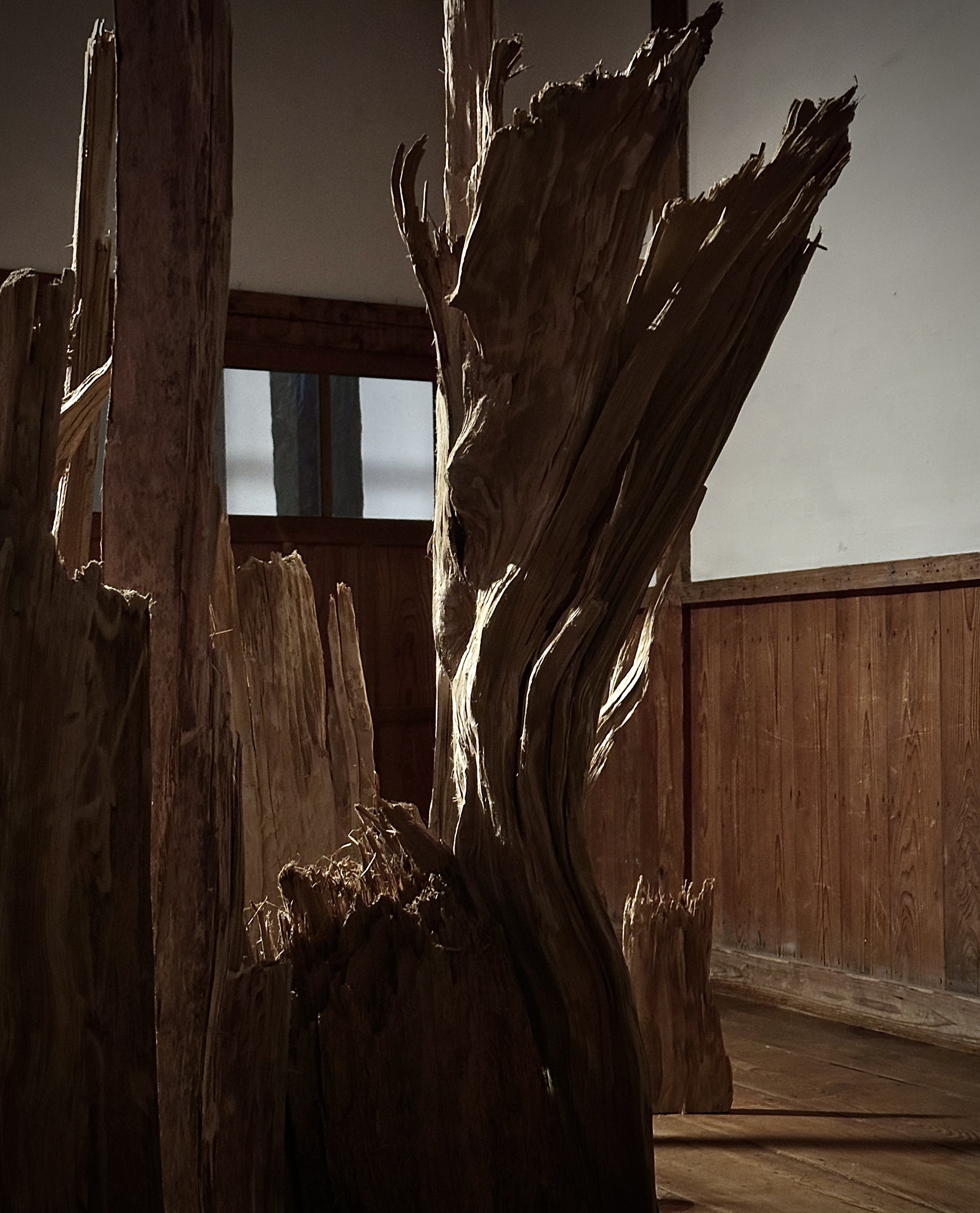
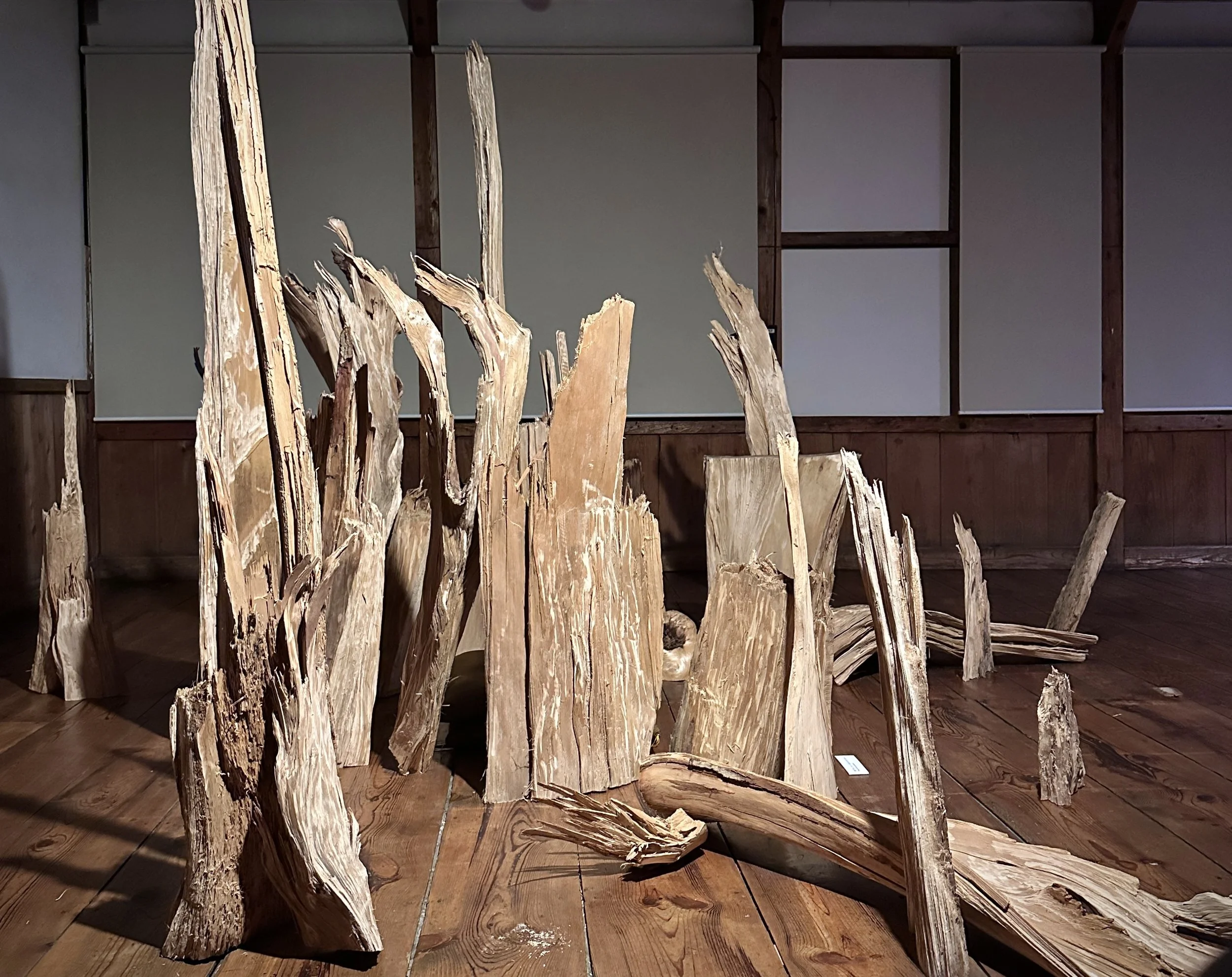
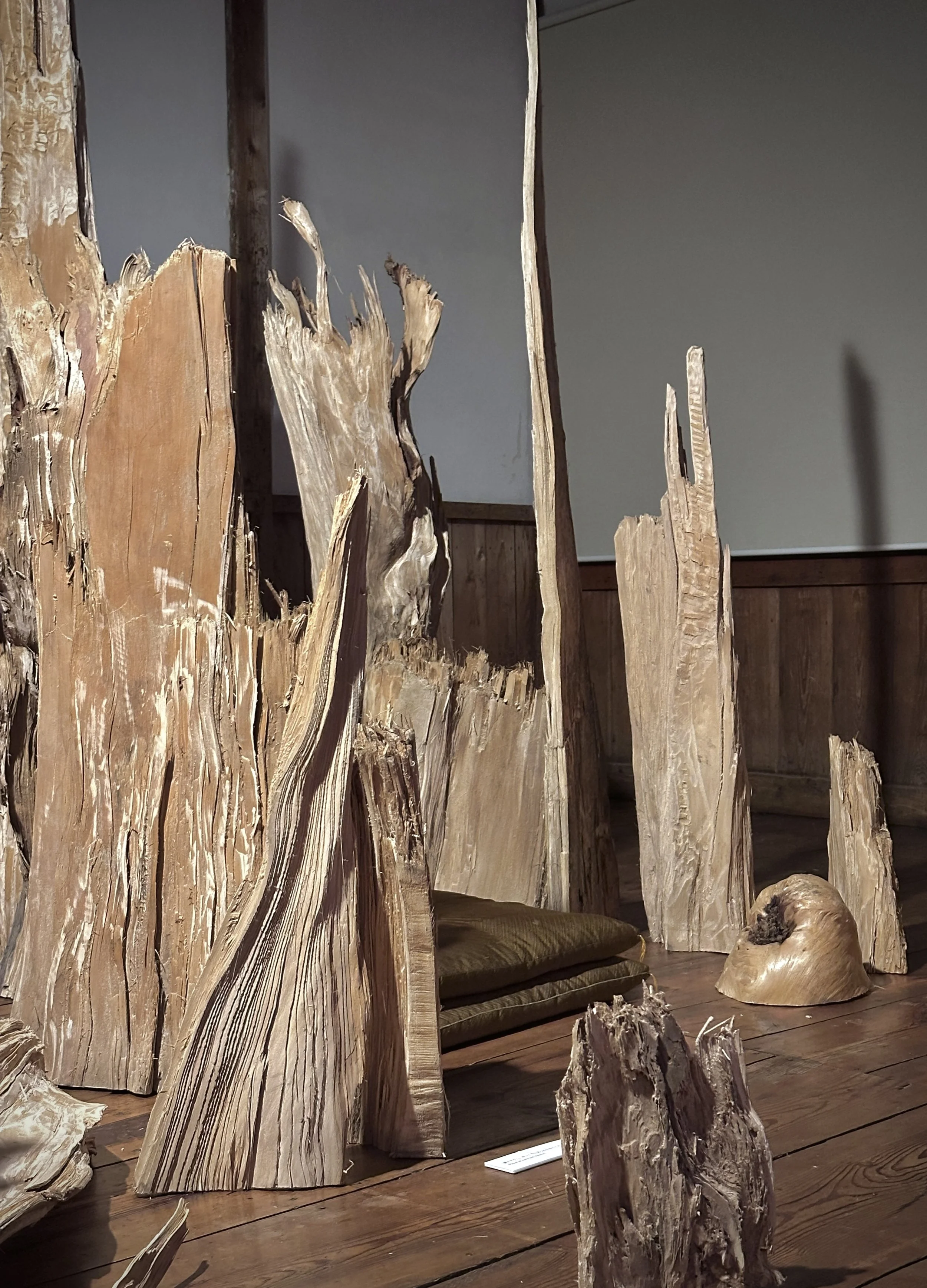
Shrine - 神社
Fir wood
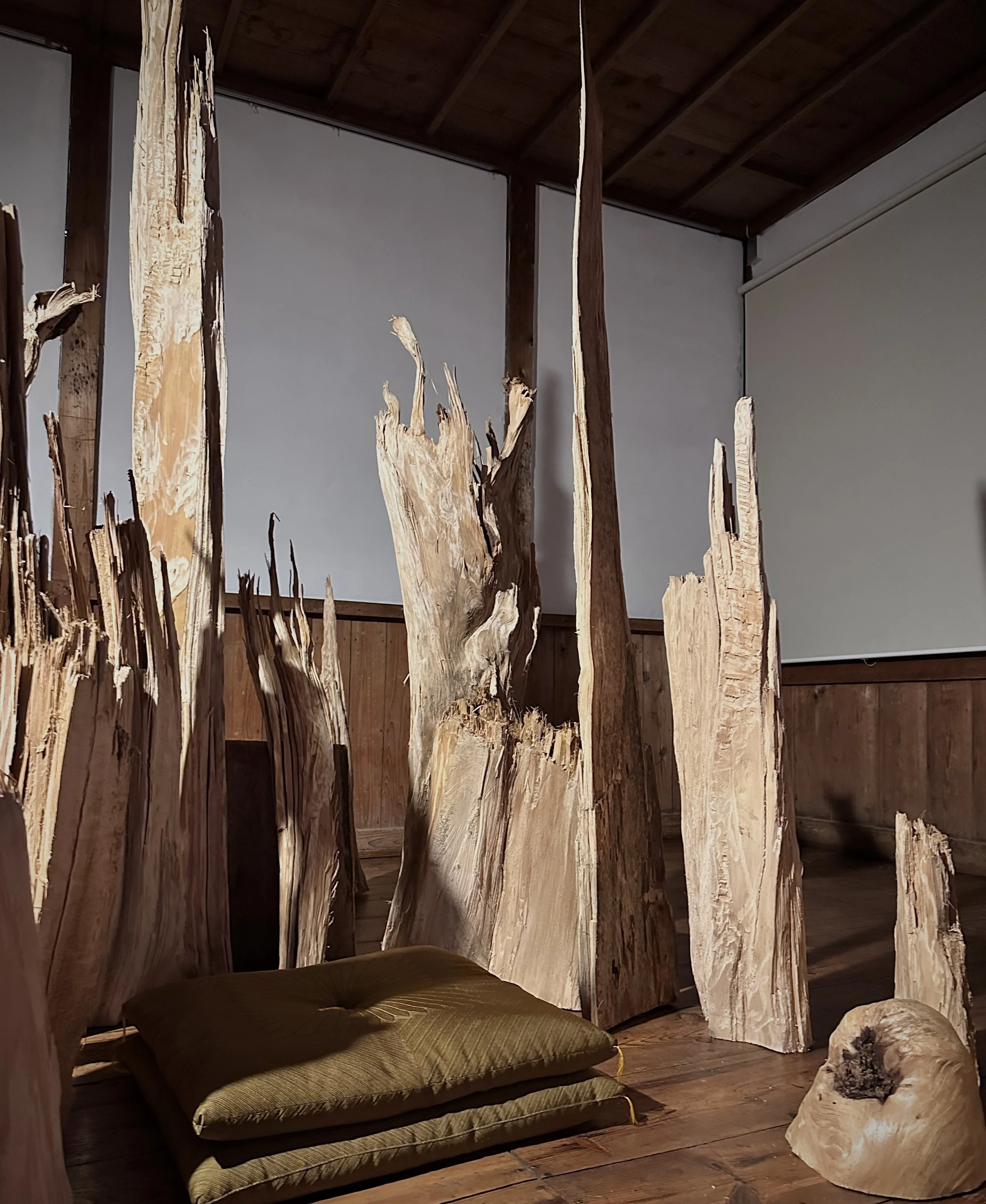
When I visited the Hikawa shrine in Nishiaizu, I was struck by the peace and loneliness of the small structure, and the dense forest surrounding it. A few meters from the shrine lie these fragments of a giant fallen fir tree. Perhaps hundreds of years old, I imagined the tree slowly growing, witnessing many generations of pilgrims and absorbing their prayers and hopes.
Despite its fallen, fractured condition, I was compelled by the spirit of this tree to re-imagine it. Here, it holds space for visitors from near and far, providing a quiet shrine-like space for reflection, meditation, and prayer.
___________________________________________________________
Spectral Stones
Handmade Washi Paper
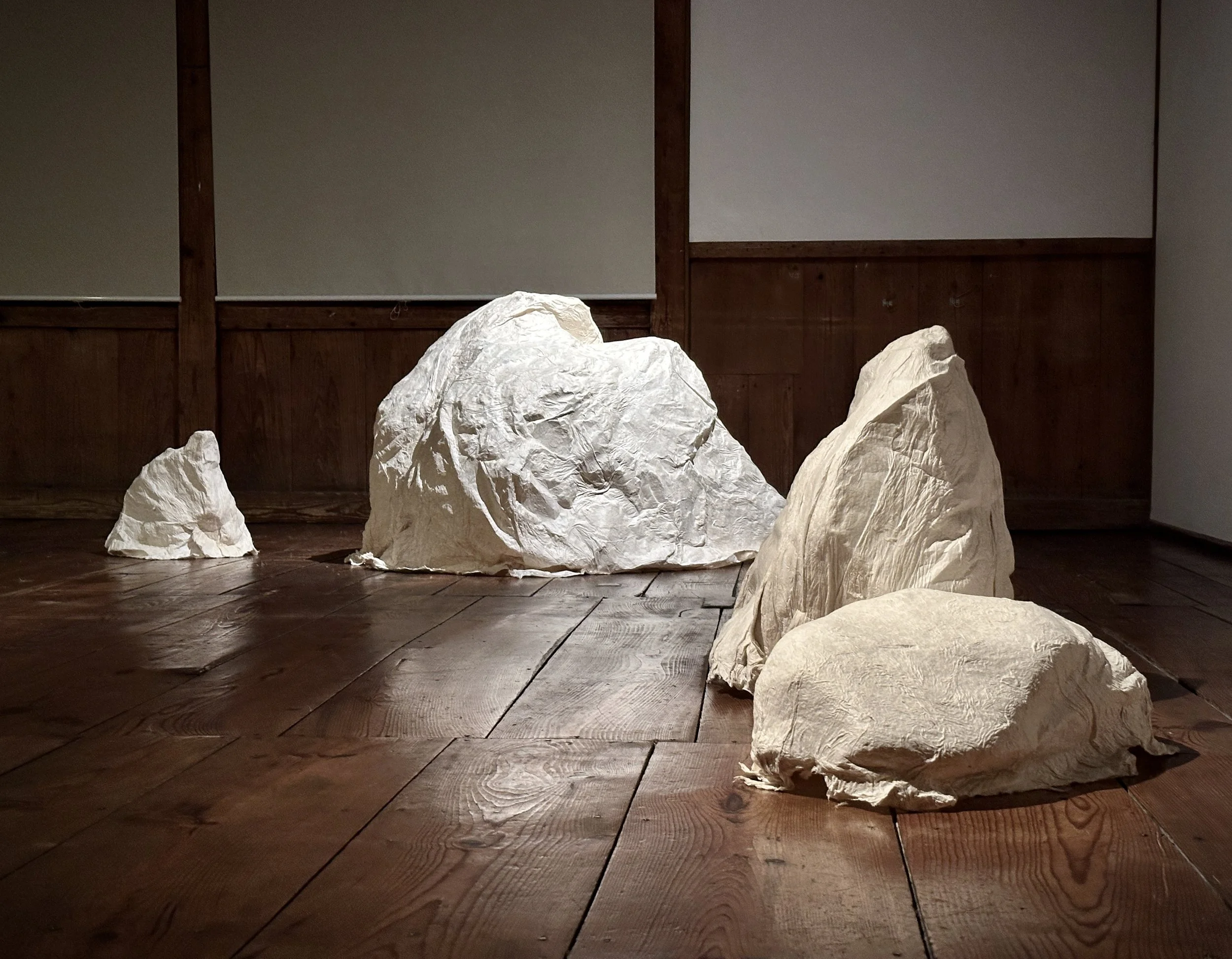
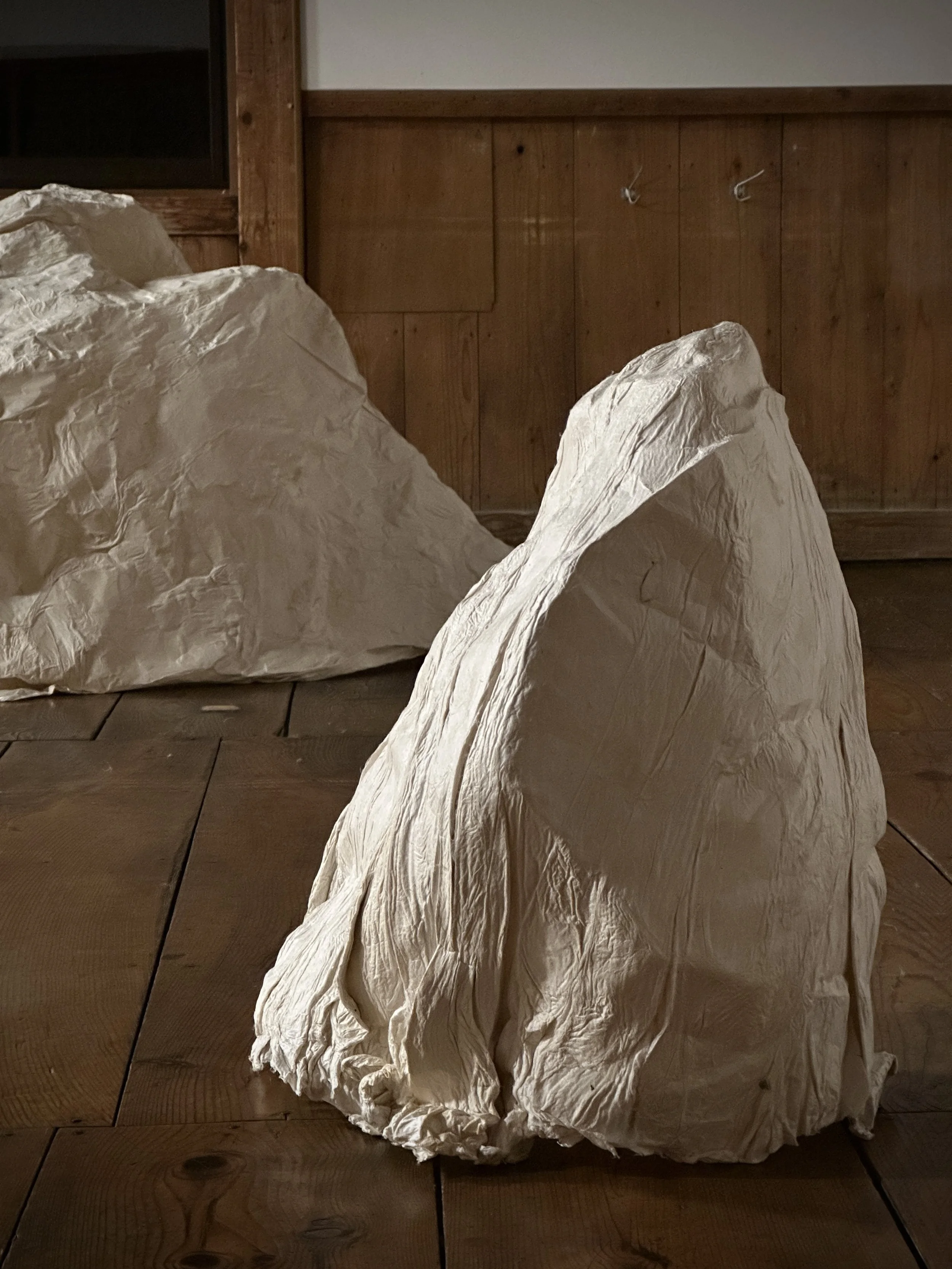
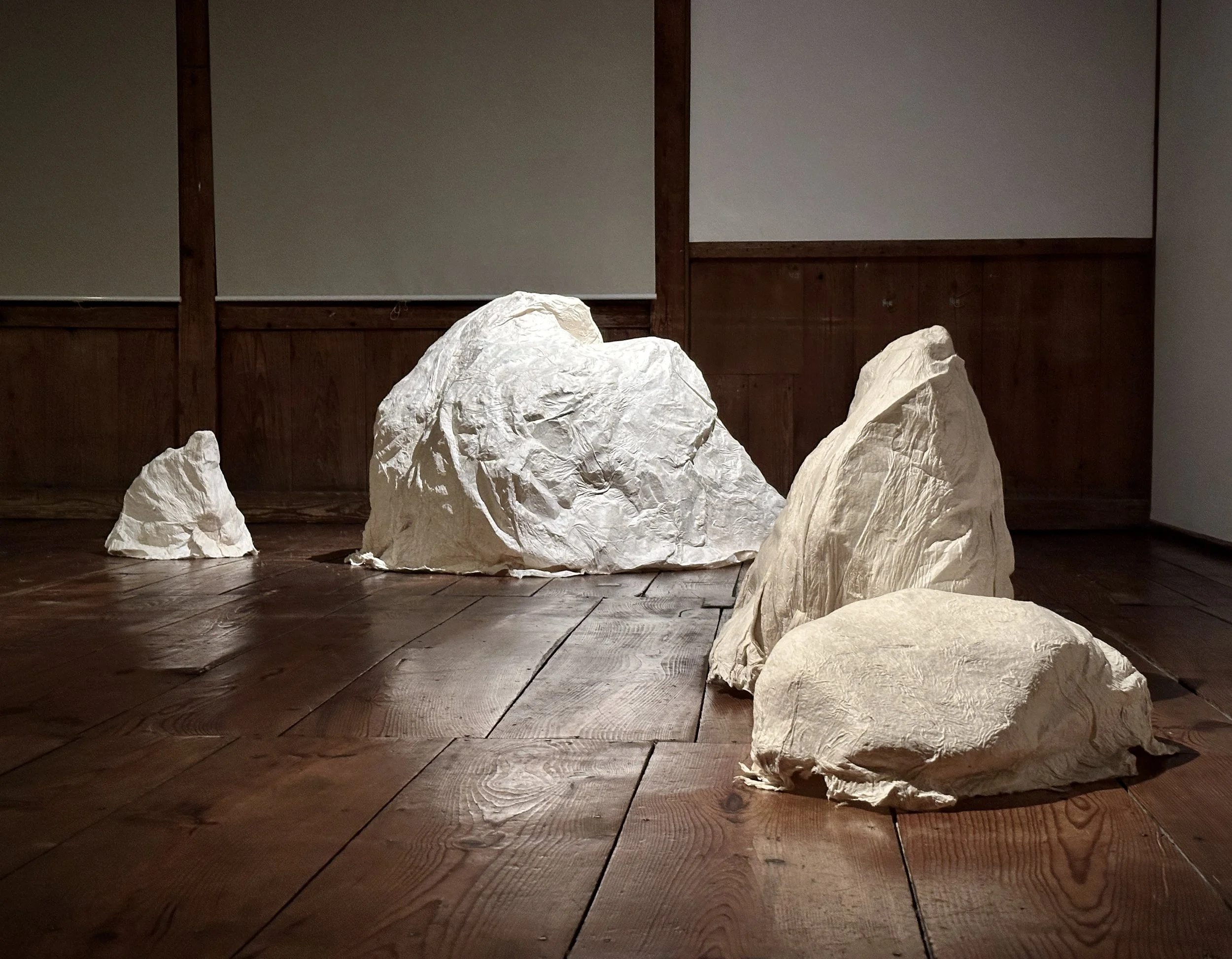
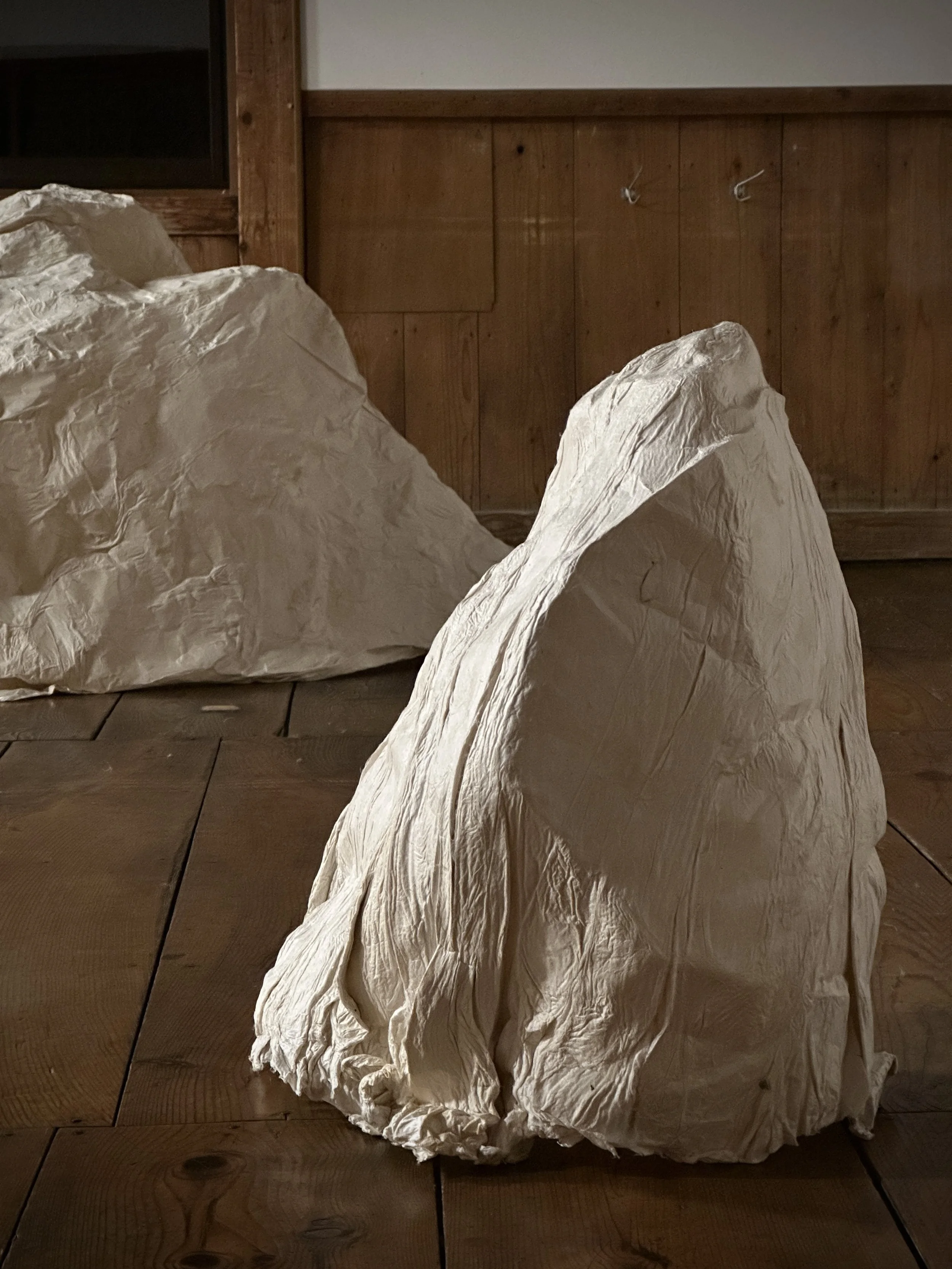
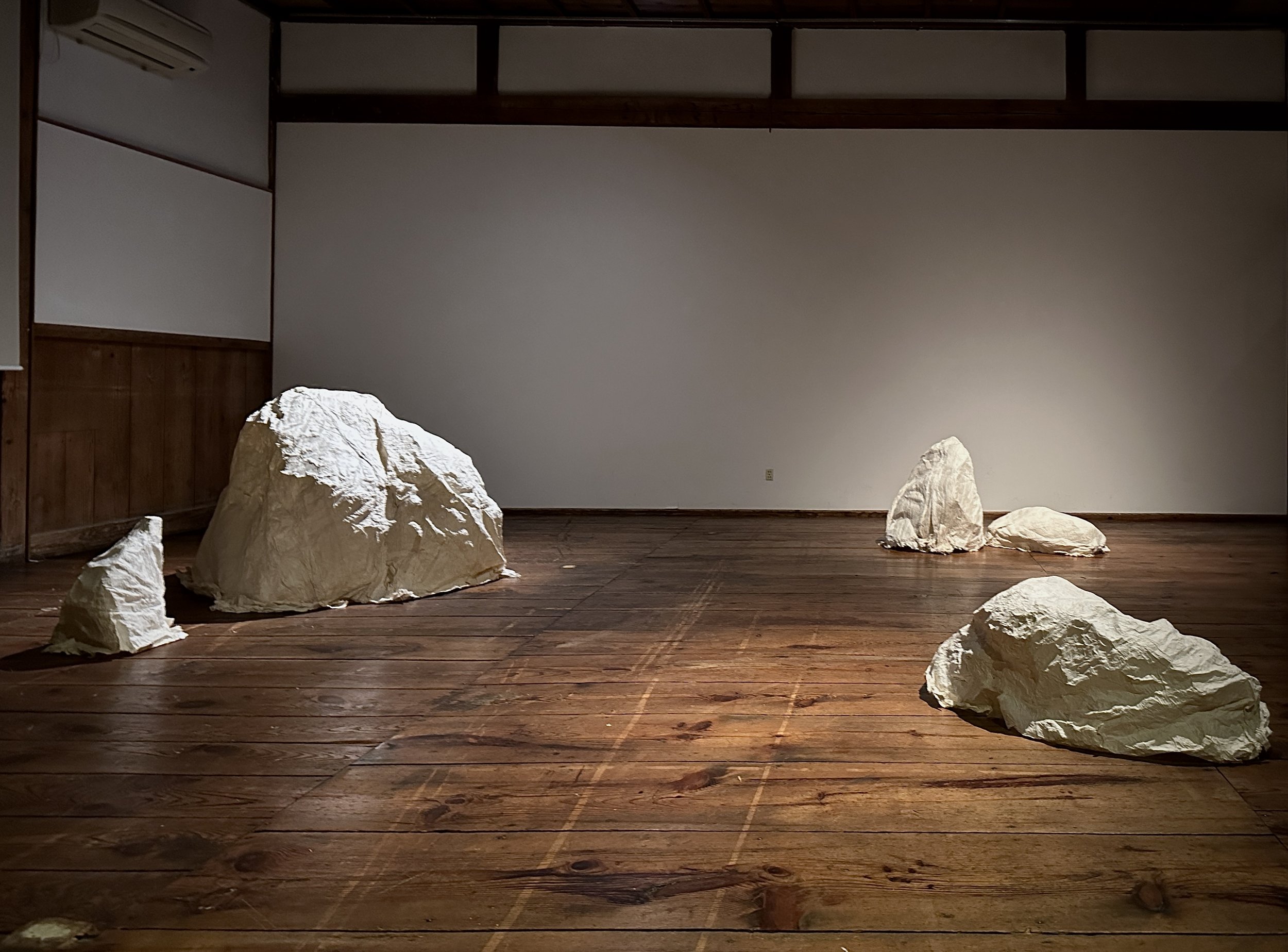
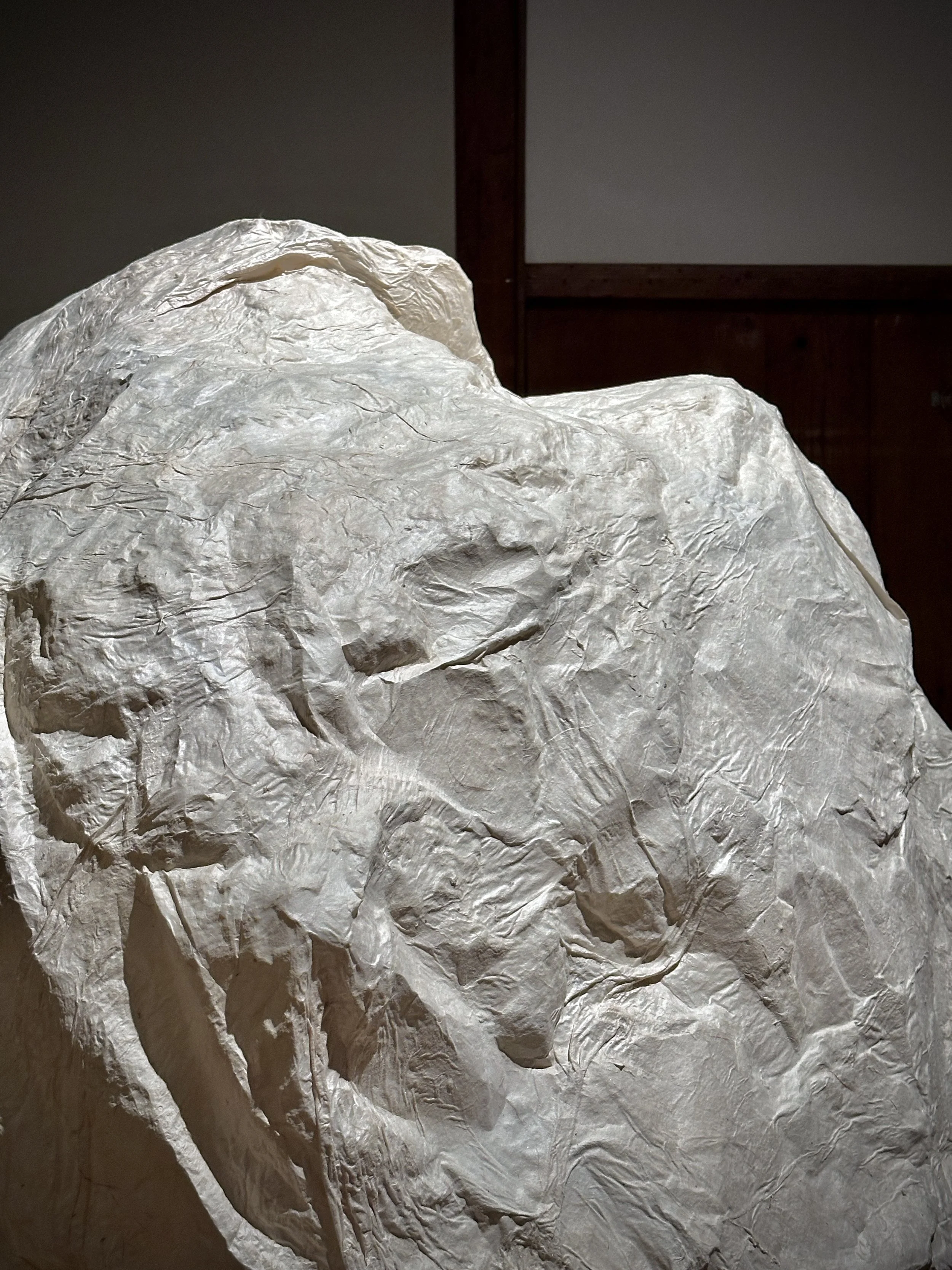
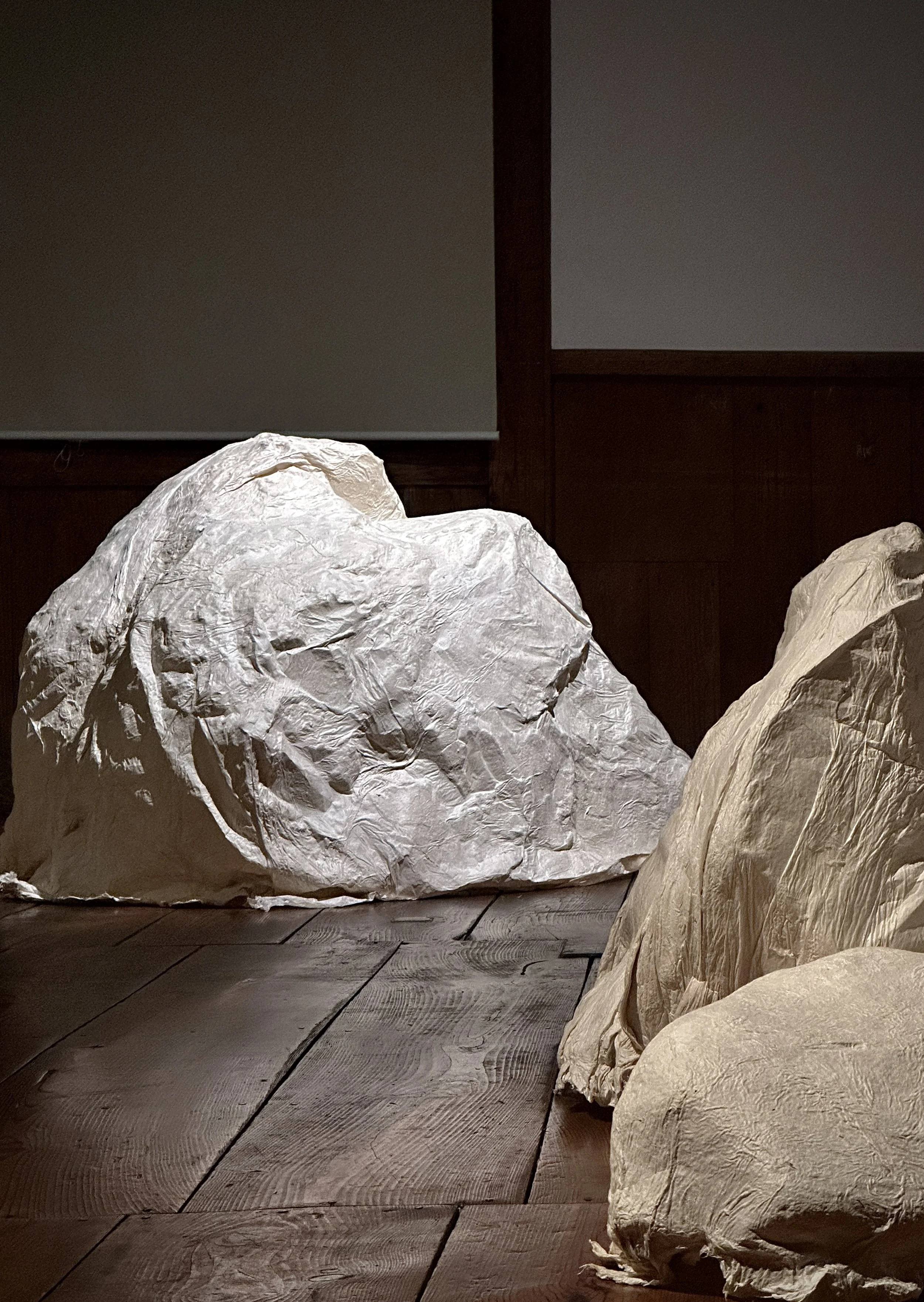
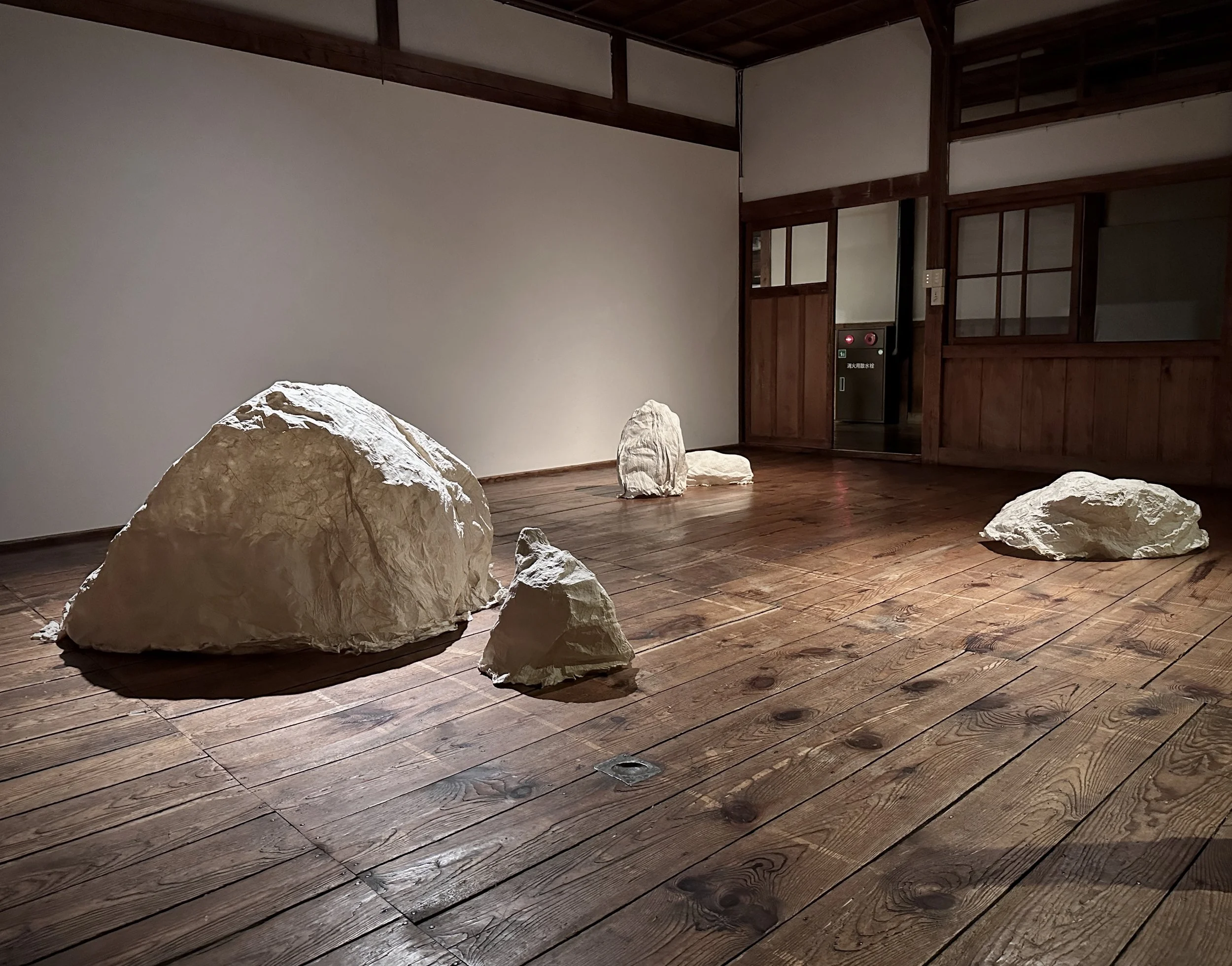
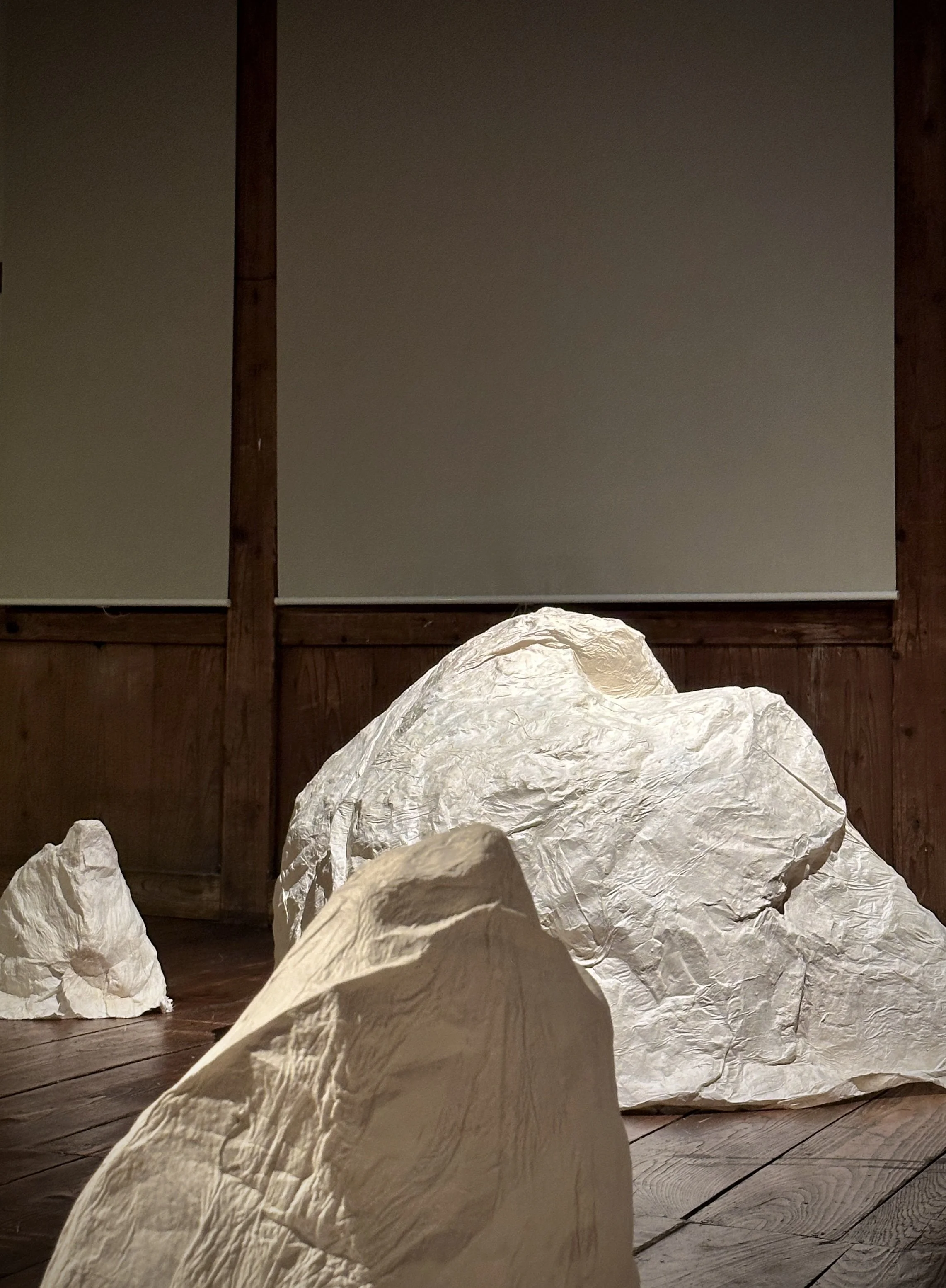
These washi paper forms pay tribute to five landscaping stones which were abandoned behind the art residency center. Here recreated as a rock-garden of paper stones, I seek to honor the stones themselves, as well as the people who have appreciated them over the years.
While the stones themselves are not present, these sculptures are abstractions of their physical bodies, each made by draping a stone with a large handmade sheet of paper. Lightweight and delicate, the Kozo fibers are in contrast with the heavy timelessness of the parent stones. However, their white ghostly quality captures the immaterial spirit which pulses from within the stones themselves.
___________________________________________________________
Scroll / Tsuchi - 掛物 / 土
Red earth from Nishiaizu River
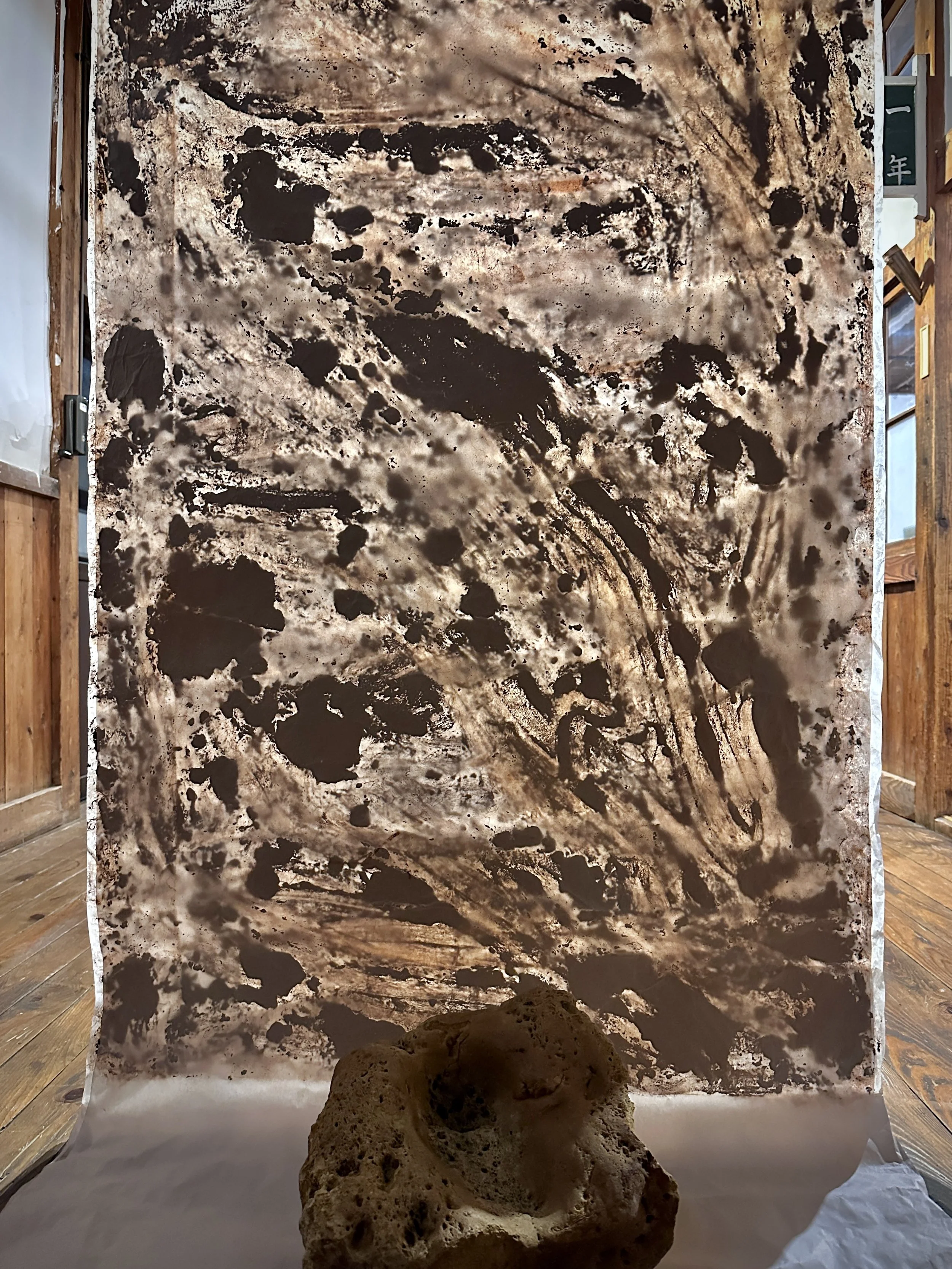
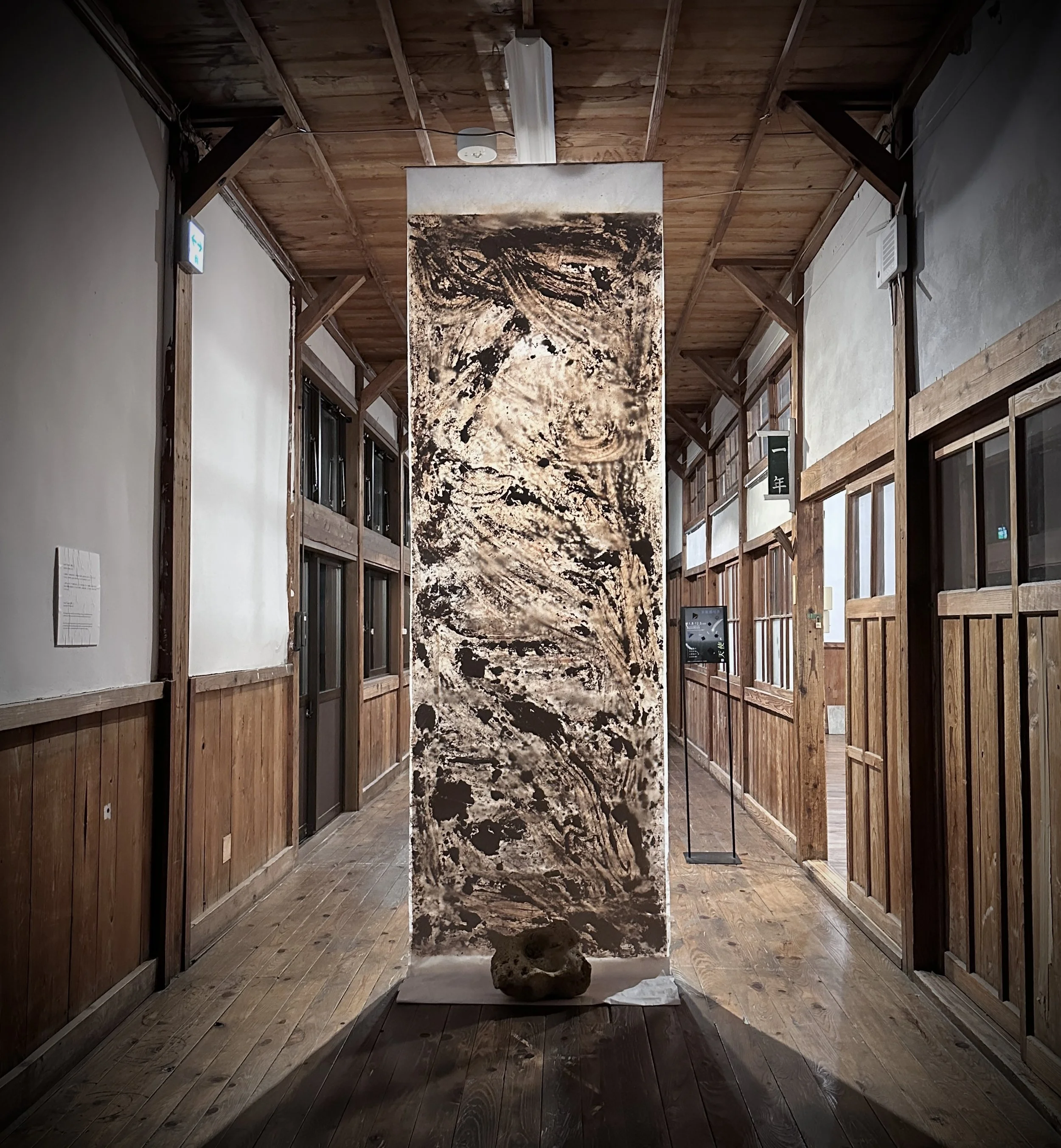
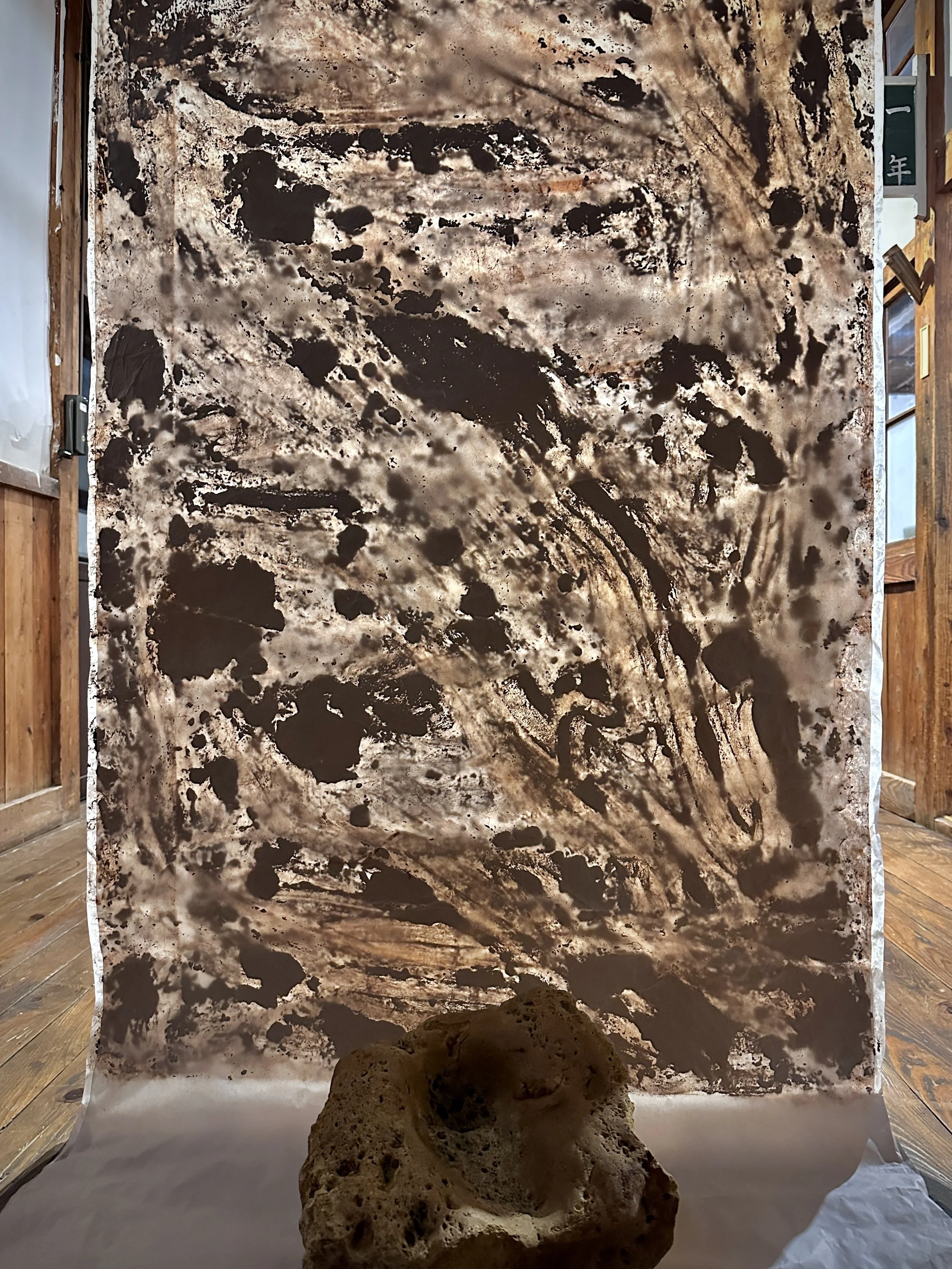
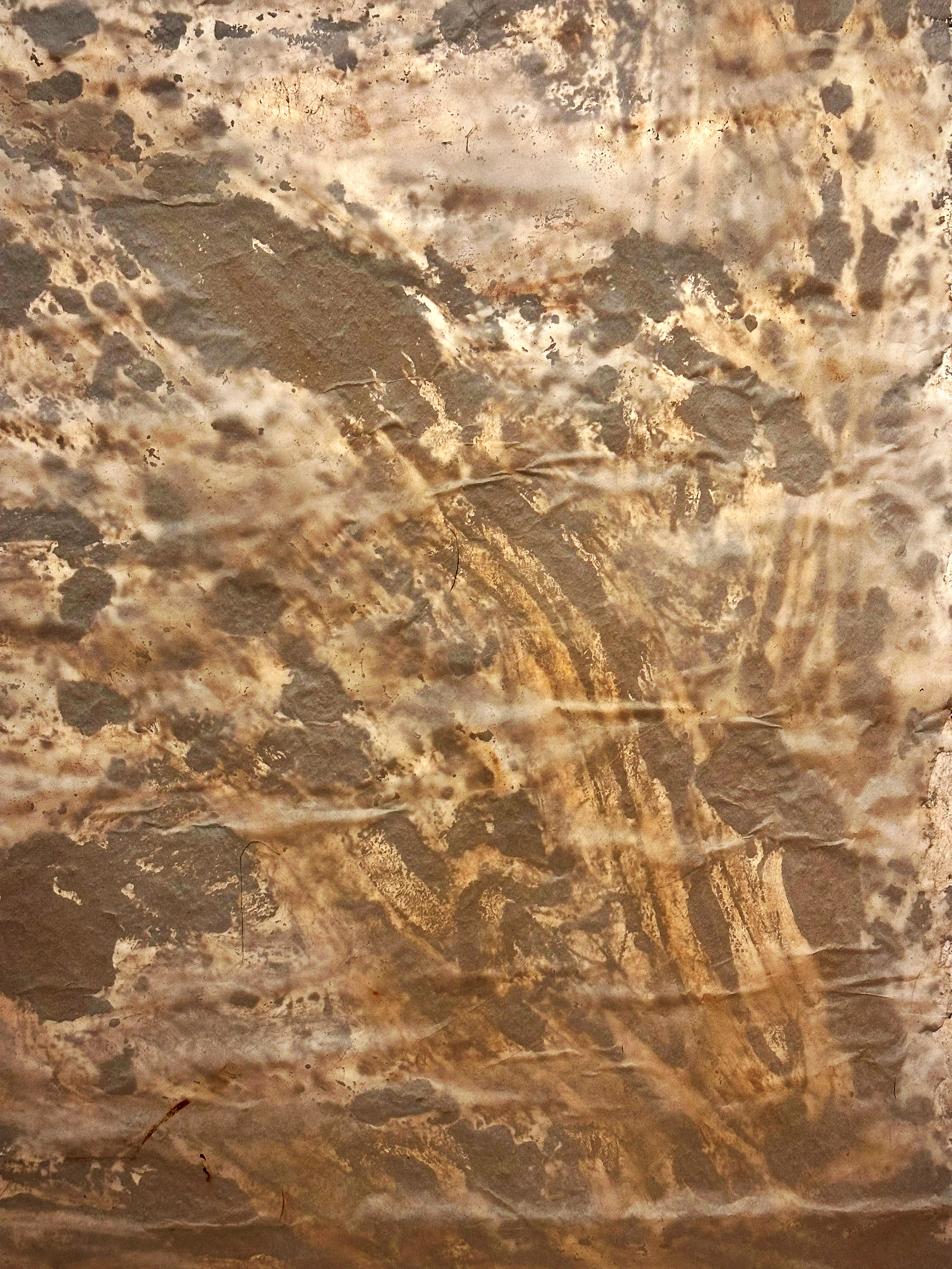
This hanging scroll is made from common shoji paper and iron-rich soil collected from a river in Nishiaizu, the same source as that used thousands of years ago in Jomon-era ceramics.
The soil was mixed with glue and water, then painted spontaneously by hand. The composition is reminiscent of an abstract landscape painting in which one may discern hazy mountains and rivers, but also serves as a window gazing both into the earth and into the past.
____________________________________________________________
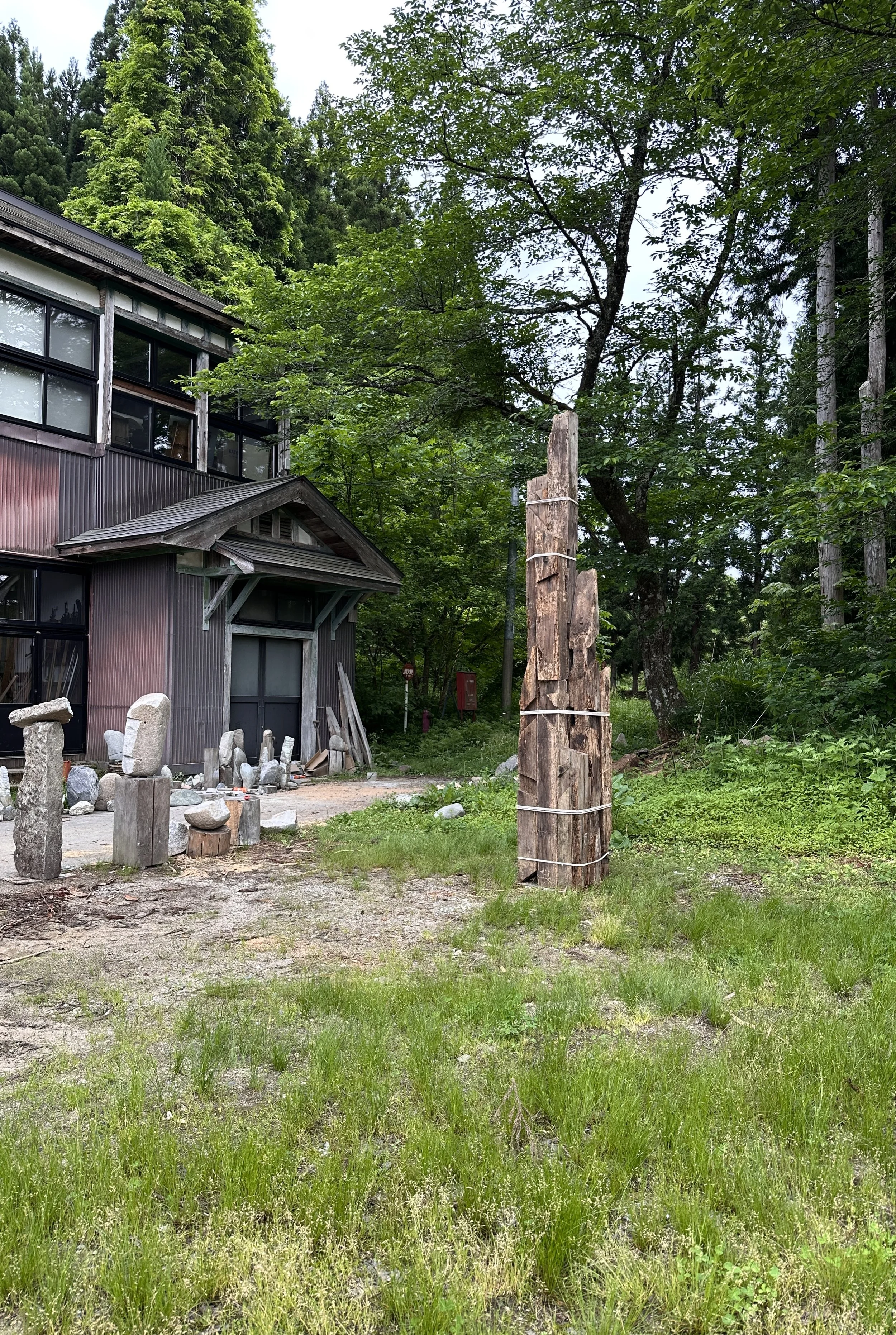
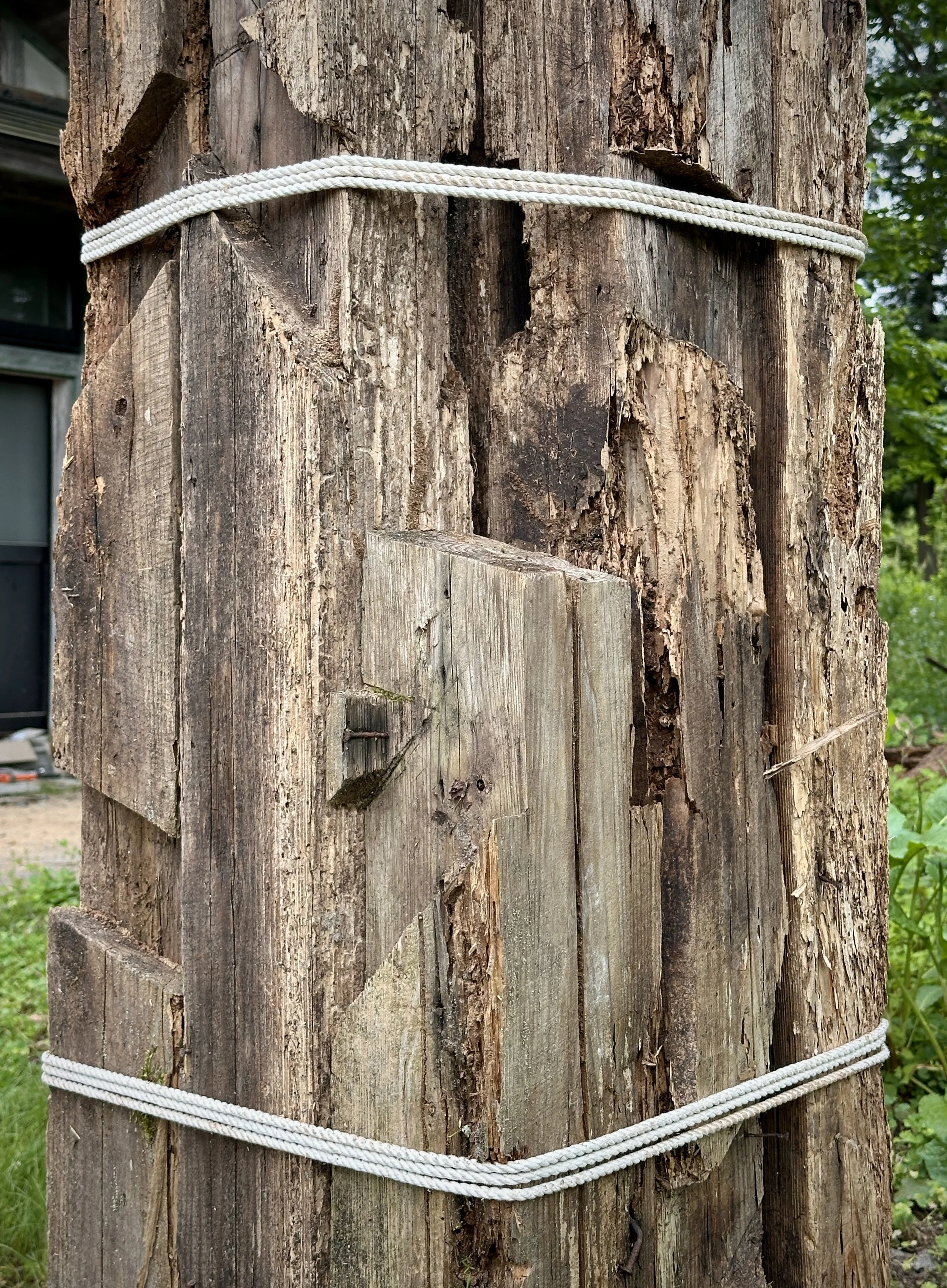
Totem (for Architectural Remains)
Salvaged lumber
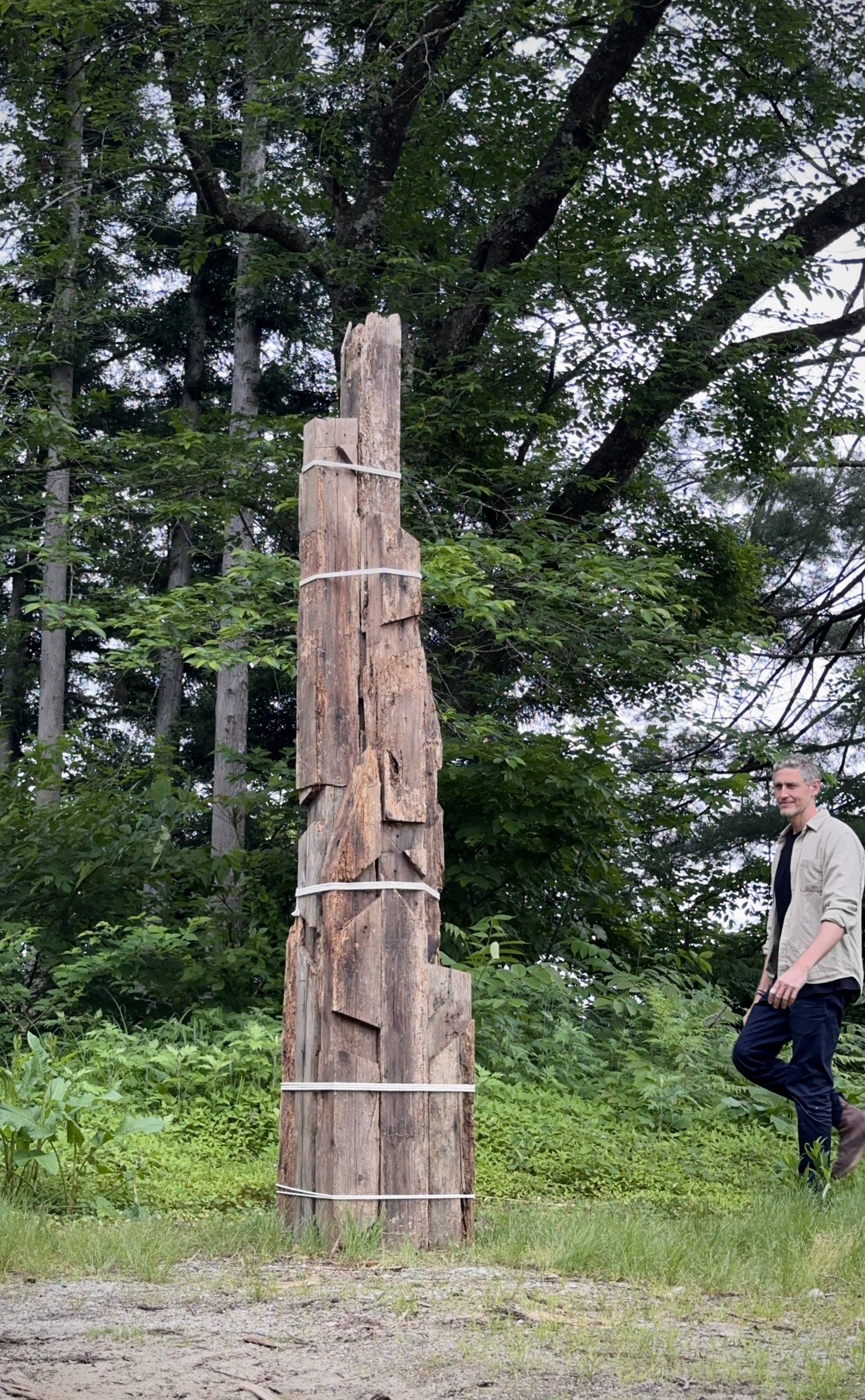
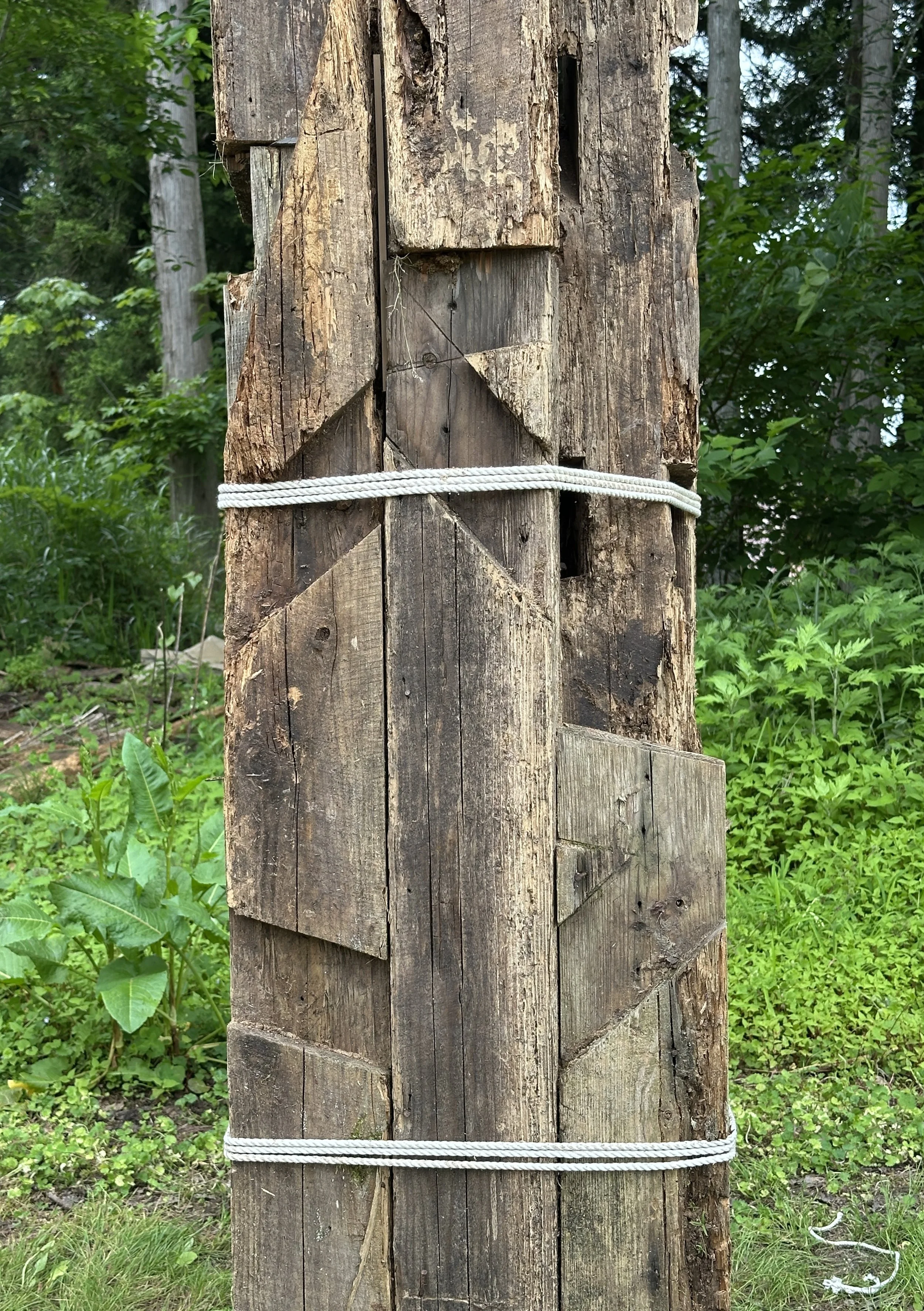
Salvaged from a traditional Japanese house, these wooden beams are the result of a collaboration between human hands and those of time. The geometric hand-cut joinery, designed to interlock and yield to forces of nature, held firm through decades of life and even the 2011 Fukushima earthquake.
When I came upon them, each beam was deteriorating, in process of returning to the earth. Yet in the softened joints and worn surfaces, I sensed the lingering spirit of the tree, curious to be reanimated into yet another form before its inevitable return to the earth.
This sculpture draws from memory as much as matter. Studying these gracefully decaying beams, I was reminded of the Buddhist practice of visualizing a corpse in decomposition as a means of overcoming attachment and desire, and embracing impermanence.
It stands—for now—as a gesture toward resilience and decay, and a tribute to the quiet life that endures within all things, even as they undergo return to the earth.
______________________________________________________
These works were created during a 30 day artist residency at Nishiaizu International Art Village